
News
Contact UsTempered vs Laminated Glass Doors: Which Is Safer for Commercial Interiors
-
 author
- 20 September 2026
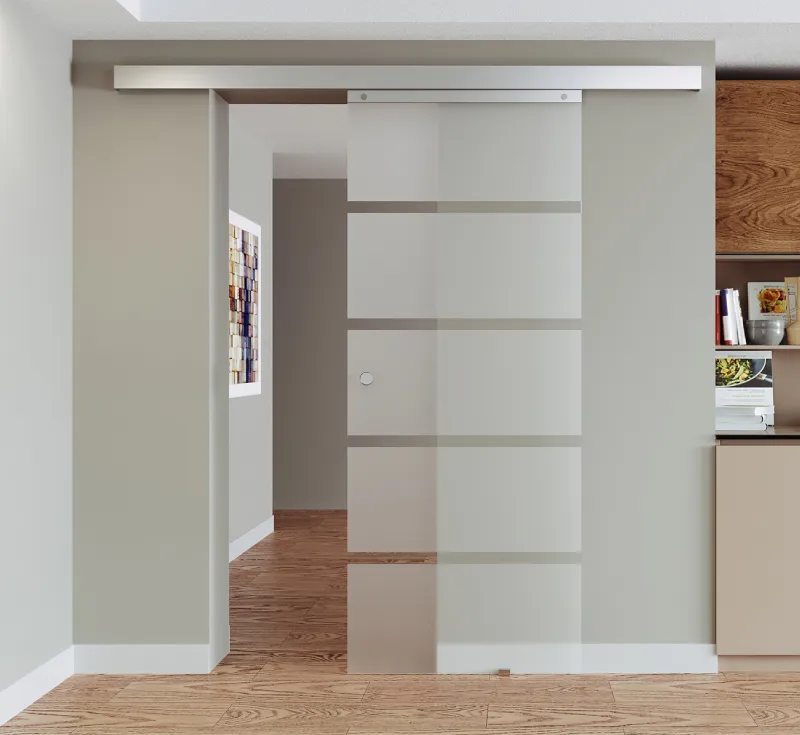
Glass doors bring daylight and visual connection into offices, hotels, retail interiors, and other commercial spaces. Safety glass, such as tempered or laminated glass, can be specified for glass doors, but the two types of glass behave differently when they fail. To choose between tempered glass doors and laminated glass doors, it is necessary to compare their failure modes with consideration of the door’s assembly and then evaluate the various factors that affect the choice of a commercial glass door project, including the location of the doors, the amount of traffic using them, the impact exposure they are subject to, issues of privacy, acoustics, door hardware, replacement access, and code requirements.
What Happens When Each Glass Type Breaks?
The key distinction is what glass does after impact. That affects safety, clean-up, and restoration speed.
Tempered Glass Breaks Into Small Pieces
The failure mode of safety glass is of primary concern. When it fails, safety glass breaks. In the case of tempered glass, it breaks into small, blunt granules rather than long, pointed splinters that could cause serious injury. In terms of strength under normal thermal and mechanical stress, tempered glass is generally stronger than untreated annealed glass of the same thickness. However, when it fails, the glass suddenly breaks. As a result, the pane ceases to function as a barrier at the moment of failure. The affected opening would need to be isolated, the broken glass cleared, the opening covered with a temporary barrier, such as a board, and then the glass replaced. A tempered safety glass interior door can be the practical answer where quick fragment release is preferred and the surrounding frame can be secured while repairs are arranged.
Laminated Glass Holds Fragments Together
Laminated glass is made up of two or more glass plies, bound together with an interlayer. The glass may develop web-like cracks after an impact, but the interlayer holds the majority of the fragments together, retaining a degree of separation between them. While the glass may appear to be badly damaged, it is unlikely to collapse and form a pile of sharp fragments. Instead, it is likely to provide a residual barrier to entry, for example, near to a staircase, along public routes, or where the opening cannot be covered up. Importantly, a laminated glass partition is not an ‘off-the-shelf’ product and needs to be specified on a project-by-project basis. While laminated glass is a safe option, the term ‘laminated’ does not always mean ‘safer’ and needs to be qualified with further details of the glass builds, edge treatments, frames, and tested assemblies that make up the overall laminated glass partition.
Which Option Gives Better Protection In A Commercial Space?
The safer choice depends on the consequence of failure at the exact opening. A hotel corridor, office partition, and storefront each have different priorities.
Choose Tempered When Clean Fragment Release Matters
Tempered glass is often a sound fit for interior doors with frequent human contact when the design needs a clean, unobstructed panel and the project can manage replacement after a break. It suits many frameless or slim-framed designs, provided the hardware and glass thickness are matched before fabrication. Tempered glass is also useful where thermal stress and routine impact resistance are part of the brief, although it should never be treated as a substitute for a complete impact-safety review.
Choose Laminated When A Residual Barrier Matters
We often take a closer look at laminated glass when post-breakage retention of glass is more important than the lowest weight or simplest replacement. This applies to a laminated glass partition near stairs, doors beside public areas of circulation, meeting rooms that need a stronger privacy layer, etc. In such cases, the interlayer can also contribute to acoustic and solar-control properties when the build-up is designed for these purposes. However, laminated glass has its limitations. For instance, it is often heavier, more demanding in terms of edging than other types of glass, and more expensive to replace than, for example, float glass. This means that the chosen door hardware must be able to deal with the completed panel, not just with the glass thickness. Transport protection and on-site storage also deserve attention because edge damage can undermine a panel before it reaches the frame.
How Do Privacy, Acoustics, And Hardware Change The Decision?
Safety is only one part of a commercial interior specification. The glass choice also has to meet privacy, acoustic, visibility, and operating needs.
Privacy And Acoustics Need A Complete Build-Up
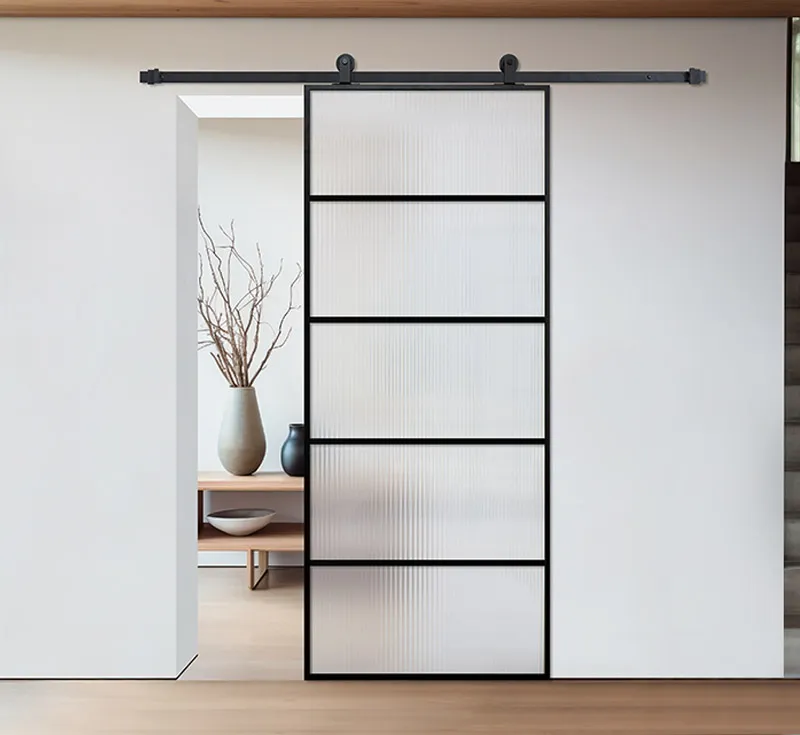
Clear tempered glass offers maximum visibility but little visual privacy. Frosted, fluted, patterned, or film-treated glass can change that appearance, yet a surface treatment does not automatically provide strong sound control. Laminated glass can help when an acoustic interlayer is part of a tested build-up, but the door leaf, seals, frame, floor gap, and adjacent partition still govern the real result. A safety glass interior door for a meeting room should therefore be assessed for privacy and sound as an assembly.
Hardware Must Carry The Finished Panel

Glass type changes weight, thickness, edge detail, and the way the panel connects to the hardware. The buyer should confirm the actual finished weight, glass build-up, hole and notch schedule, rail or hinge capacity, safety factor, floor guide, and replacement method before ordering. These checks are particularly important for sliding leaves, where rollers and end stops see repeated movement rather than a single static load.
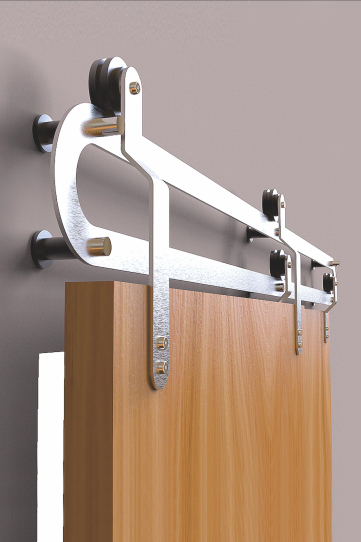
A published capacity is useful only when the project matches the tested application. Metek’s glass barn door sliding system lists 10 mm or 12 mm tempered safety glass, a maximum 220 lb or 100 kg per leaf, 304 stainless steel or high-strength carbon steel hardware, and 2 m or 2.4 m rail options. These details can guide a tempered-glass sliding door selection but do not establish a laminated-glass rating.
What Should Buyers Check Before Releasing a Glass Door Order?
The material decision becomes easier when the purchase package includes the conditions governing the door: opening schedule, panel dimensions, finished weight, glass build-up, hardware layout, privacy target, traffic level, and installation environment.
Check The Opening And The Surrounding Construction
Confirm whether the door is hinged, sliding, pivoting, or part of a fixed partition, then check the frame, adjacent walls, floor level, clearances, and service access. For sliding doors, review rail length, parking space, anti-jump provisions, floor-guide position, and stop or soft-close behavior. For hinged doors, review hinge loading, patch fittings, closer force, and the condition of the jamb. A glass selection cannot correct an underspecified support detail.
Check Testing, Packaging, And Replacement Planning
Ask for the applicable safety and performance references for the final model, not a generic certificate from an unrelated product. Metek has CE, ANSI-BHMA, EN 12600, FSC, Proposition 65, and TPCH references, with some models tested by SGS, Intertek, or BV. The relevant document depends on the product and destination market, so the buyer should identify the exact model before making a compliance claim.
Packaging is part of the safety decision because chipped edges can become site issues before installation. Reinforced cartons, foam protection, separate hardware packs, and hardware-and-door packaging can follow the project sequence. Multi-site orders also need labels, spare wear parts, and a damaged-pane replacement plan.
Where Does A Supplier Fit Into The Final Choice?
A supplier becomes useful when the conversation moves beyond choosing a glass pane. The buyer needs a matched door, frame, hardware, finish, packing method, and technical response.
Use Product And Project Support Together
Metek has supplied barn door hardware, sliding doors, metal-frame glass doors, and frameless glass doors since 2011. Its production base includes a 12,000 square meter factory, 92 production machines, three testing machines, and more than 80 employees. That breadth can simplify coordination for a commercial glass door package.
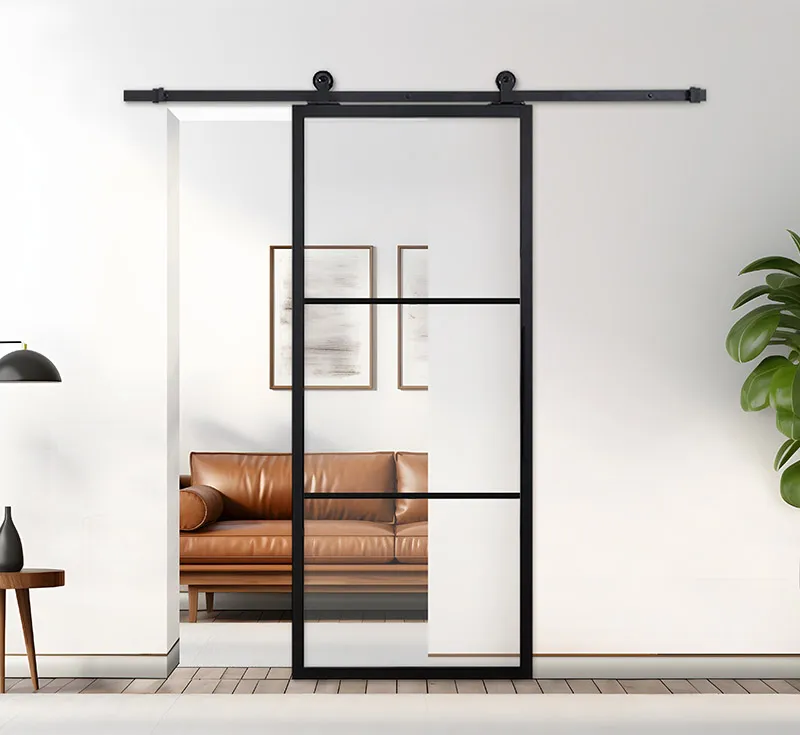
The right starting point is the opening schedule and performance target. From there, the buyer can compare the glass door and partition, review the metal frame glass sliding door, or use the glass barn door sliding system when the opening needs a tested sliding hardware configuration. The broader sliding door system can help when the project includes several door movements. Questions about drawings, samples, custom finishes, or bulk delivery belong in early project support, before the final glass build-up is released.
In commercial interiors, a tempered glass sliding door can be practical when fragment behavior, clean appearance, and replacement access lead the brief. Laminated glass is stronger when retaining a damaged barrier or improving privacy matters more. The safer decision comes from matching the glass, frame, hardware, installation, and maintenance plan to the room. For a coordinated package, Metek can review the opening schedule before release.
FAQ
Q1: Is laminated glass always safer than tempered glass?
A1: No. Laminated glass can retain fragments and preserve a residual barrier, while tempered glass generally breaks into small granules. The safer choice depends on impact exposure, opening location, privacy, hardware, code, and replacement requirements.
Q2: Can laminated glass be used in a sliding interior door?
A2: It can be used when the finished panel weight, thickness, edge detail, fittings, and tested hardware capacity are compatible. The supplier should review the complete configuration before production.
Q3: What should a commercial buyer ask for before ordering?
A3: Confirm the glass build-up, finished weight, safety and performance references, hardware capacity, frame detail, privacy target, packaging method, replacement plan, and destination-market requirements for the exact model.





Our Products
Our Products

our testimonials
What They Say About Us

"We trust Metek, have always had a very good relationship with each of you folks;
Metek is reliable, not only as business partner, but also friends.
You can tackle issues; you can go on and move on.
And that’s what’s we did—together with all Metek!"

"Metek is 10 years old, and we have been working with Metek for more than 8 years.
We still welcome progressing and achieve more than what we did last year.
And it is big achievement, which was done at Metek last ten years.
In the next decade, we will keep going and develop the Australian market together."

"To all Metek members
We now work six years together,we still grow together with Metek, with one of our best suppliers in China.
Why are you one of the best?
It’s because you help us to create our market; you help us to create new products; and you help us to get the right quality; you help us to wonder our issues.
You know, you are all very good educators; you understand our language; you understand us as customer.
And I think that makes the partnership show you are together.
And I hope for the next years, we can still work together, and move on together into your future creative, beautiful products."