
News
Contact UsHow Much Weight Can Barn Door Hardware Hold: A Buyer’s Load Checklist
-
 author
- 24 August 2026
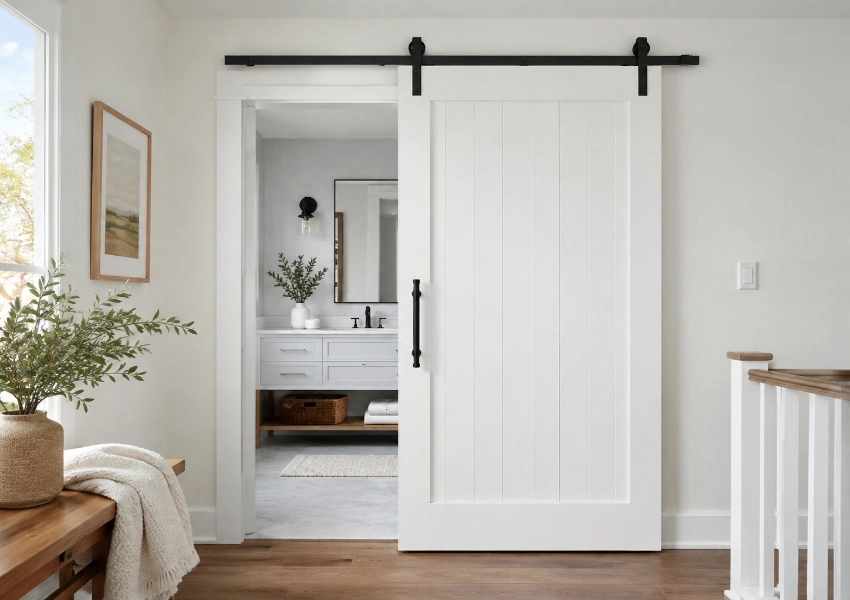
A barn door can feel light when it glides well. That does not mean the hardware is lightly loaded. The rail carries the panel, the rollers handle repeated movement, and the wall takes the pull every time someone opens the door. For a hotel corridor, apartment closet, bathroom, or retail display wall, barn door weight capacity is not a small catalog line. It decides whether the door stays quiet and square after installation.
Most buyers first ask for a number: 80 kg, 100 kg, 220 lb, or higher. The number matters, but it is only the starting point. A reliable sliding door hardware weight limit also depends on door material, track section, roller design, bracket spacing, wall fixing, stopper strength, and daily traffic.
Why The Published Load Rating Is Only The First Check
The rated load tells buyers what a system is designed to carry under a stated condition. Real projects rarely stay that neat. A solid wood slab behaves differently from a glass panel, and the same weight can feel different when the rail is long or the wall fixing is weak.
Static Load And Moving Load Are Different
Static load is the panel weight when the door is at rest. Moving load is what the system feels when the panel starts, stops, or hits the end stopper. That second part is where weak hardware usually shows itself. A 90 kg door may be acceptable on paper, but hard daily use can stress the roller, rail, and bracket.
For this reason, barn door track load capacity should be checked against the actual panel, not only the product name. Metek’s selected barn door kits are positioned around the 100 kg/220 lb class, while its bypassing sliding system supports up to 80 kg per panel with 35-45 mm door thickness. The lesson is simple: match the system type to the panel and room.
Door Thickness Changes The Load Behavior
Thickness changes the center of gravity, hanger fit, floor guide position, and wall clearance. Barn door kits may serve wood, glass, or metal-framed doors, and each fixing method behaves differently. If the panel is outside the hardware range, the door may hang, but the movement can feel tight or tilted.
How To Estimate The Real Door Weight Before Ordering
A buyer does not need laboratory equipment to make a good first judgment. The practical check starts with material, size, and hardware layout. A full-height solid wood door can move beyond light-duty kits. Glass panels need closer attention because clamps, holes, anti-jump parts, and bottom guides all have to suit the panel.
Start With Panel Material And Size
Wood, metal-frame glass, frameless glass, and composite panels all load the system differently. A tall panel puts more force into the rail when pushed from the edge. A wide panel can twist during movement. When buyers request barn door kits, the question is not only whether the kit carries the door. Roller spacing, rail length, stops, and guides matter too.
Metek has sliding doors, barn door hardware, metal-frame glass doors, frameless glass doors, and wooden door options. That helps B2B buyers check door panels and hardware together instead of treating the rail as a separate accessory.
Add A Margin For Daily Use
A door weighing 98 kg should not be treated casually just because a kit is rated at 100 kg. Repeated use needs a margin. If the real panel weight sits close to the rated limit, move up in hardware grade or reduce the panel weight. This matters in rentals, hotels, and commercial spaces.
Which Hardware Parts Carry The Load
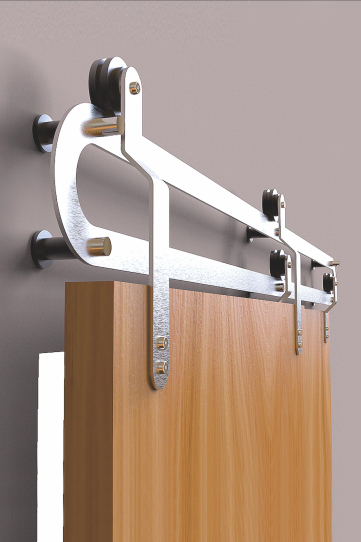
A barn door system is a small structure: a rail, hangers, rollers, anti-jump blocks, stoppers, spacers, guides, fasteners, and sometimes soft-closing parts. The barn door track load capacity is shaped by all of them, so the weakest part can decide the service life.
Tracks, Hangers, And Rollers
The rail must stay straight under weight. Hangers must hold the panel without bending around the fixing points. Rollers must turn smoothly under pressure and resist side movement. Metek uses different material structures across its sliding door system range, including aluminum alloy tracks for bypassing and bifold systems, plus steel and aluminum structures in its broader hardware line.
The same thinking applies to heavy-duty barn door hardware. A thick black rail may look strong, but bracket spacing and wall fixing still decide how the load reaches the building. A long rail with too few fixing points can flex. A roller that carries weight but has a poor bearing can become noisy.
Stops, Guides, And Anti-Jump Parts
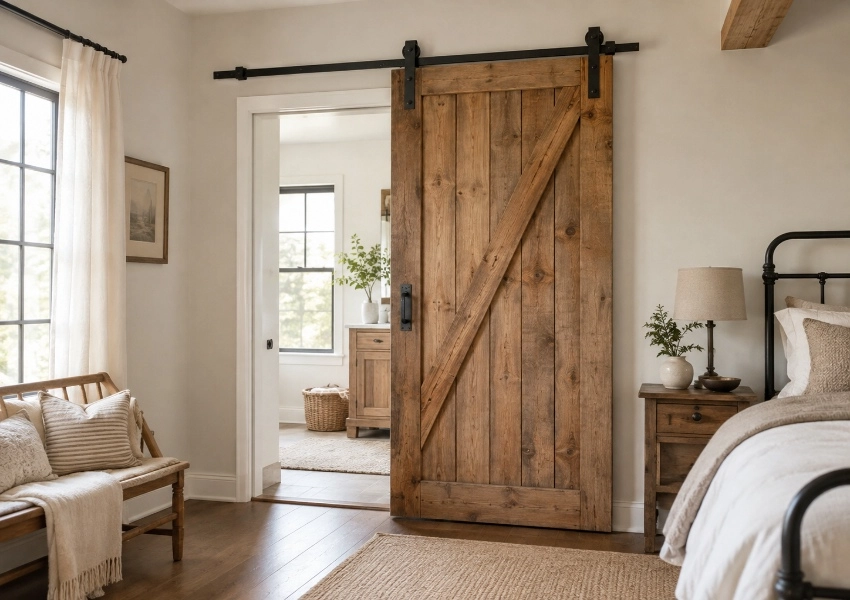
End stops catch the moving door. Floor guides keep the lower edge from swinging. Anti-jump parts keep rollers from lifting off the rail. These small parts rarely get attention in a price comparison, yet they matter in daily use. If the stopper is weak, the door may knock out of alignment. If the guide is wrong for the panel thickness, the bottom edge can scrape or sway.
How Wall And Opening Conditions Affect The Limit
Even good hardware can fail when the wall cannot take the load. A barn door rail needs a solid fixing base, correct fasteners, and a level line. Drywall, masonry, wood framing, and concrete do not behave alike. The installation plan should identify the substrate before the order is placed.
The Header Board Question
Many projects use a header board or reinforced backing to spread the load. This helps when studs do not line up with rail holes or when the wall surface alone is not strong enough. Without that support, a high sliding door hardware weight limit can still end in a weak installation.
Opening width matters too. A wide opening may need a longer track, more brackets, and careful alignment. For buyers comparing a barn door sliding system with a pocket door system or bypass option, wall condition should be part of the first conversation.
Testing, Packaging, And Supplier Checks For Bulk Orders
A single sample can pass a showroom check and still create problems in bulk. That is why a barn door hardware supplier should be evaluated through testing records, packaging control, replacement support, and project communication. The hardware must arrive complete and stay consistent across batches.
Ask About Load And Cycle Testing
Metek records quality references such as CE, FSC, ANSI-BHMA, EN 13561, EN 12600, Proposition 65, TPCH, and selected tests by SGS, Intertek, and BV. It also includes a BHMA-related reference for friction load at 100 kg, static load at 200 kg, 25,000 cycles, and 48 hours for certain hardware information. Buyers should ask which exact model was tested and whether the finish and roller set match the sample.
This is where a barn door hardware supplier adds real value. Buyers need clear answers on rated load, recommended working weight, door thickness, rail length, bracket spacing, wall fixing, soft-close compatibility, and spare accessories. Metek has operated since 2011, with about 12,000 square meters of factory space, 92 production machines, 3 testing machines, and more than 80 employees.
Packaging Is Part Of Load Control
Heavy hardware and door panels are easy to damage in transit. Bent rails, missing screws, chipped panels, and mixed accessories create installation delays. Metek’s packaging support covers hardware packed individually, doors and hardware packed together, retail display boxes, reinforced cartons, foam protection, and wooden cases for glass or door panels. For custom projects, Metek can also discuss size, finish, structure, installation guidance, inspection, delivery terms, spare accessories, and replacement parts.
Buyer’s Load Checklist Before Approval
Before sample approval, confirm actual panel weight and dimensions, maximum hardware rating, recommended working weight, door thickness, rail material and length, fixing points, substrate or header board needs, roller bearing type, stop and anti-jump design, packaging method, spare parts, test references, and installation instructions.
So, how much weight can barn door hardware hold? Many Metek barn door kits sit around the 100 kg/220 lb class, while other sliding systems carry different limits by design. The better question is whether the chosen hardware has enough margin for the panel, wall, and daily traffic.
FAQ
Q1: What is a safe barn door weight capacity for most interior projects?
A1: Many interior barn door kits are rated around 100 kg/220 lb, but the safe choice depends on the actual panel weight, wall fixing, track length, and daily use.
Q2: Does a higher barn door track load capacity always mean better hardware?
A2: Not always. Track rating matters, but rollers, brackets, stops, guides, fasteners, wall substrate, and installation quality also decide long-term performance.
Q3: What should buyers ask a barn door hardware supplier before bulk ordering?
A3: Ask about tested models, recommended working weight, door thickness range, rail material, bracket spacing, packaging, spare parts, and installation support.





Our Products
Our Products

our testimonials
What They Say About Us

"We trust Metek, have always had a very good relationship with each of you folks;
Metek is reliable, not only as business partner, but also friends.
You can tackle issues; you can go on and move on.
And that’s what’s we did—together with all Metek!"

"Metek is 10 years old, and we have been working with Metek for more than 8 years.
We still welcome progressing and achieve more than what we did last year.
And it is big achievement, which was done at Metek last ten years.
In the next decade, we will keep going and develop the Australian market together."

"To all Metek members
We now work six years together,we still grow together with Metek, with one of our best suppliers in China.
Why are you one of the best?
It’s because you help us to create our market; you help us to create new products; and you help us to get the right quality; you help us to wonder our issues.
You know, you are all very good educators; you understand our language; you understand us as customer.
And I think that makes the partnership show you are together.
And I hope for the next years, we can still work together, and move on together into your future creative, beautiful products."