
News
Contact UsFluted Glass vs Frosted Glass Doors: Which Provides Better Privacy and Light
-
 author
- 01 October 2026
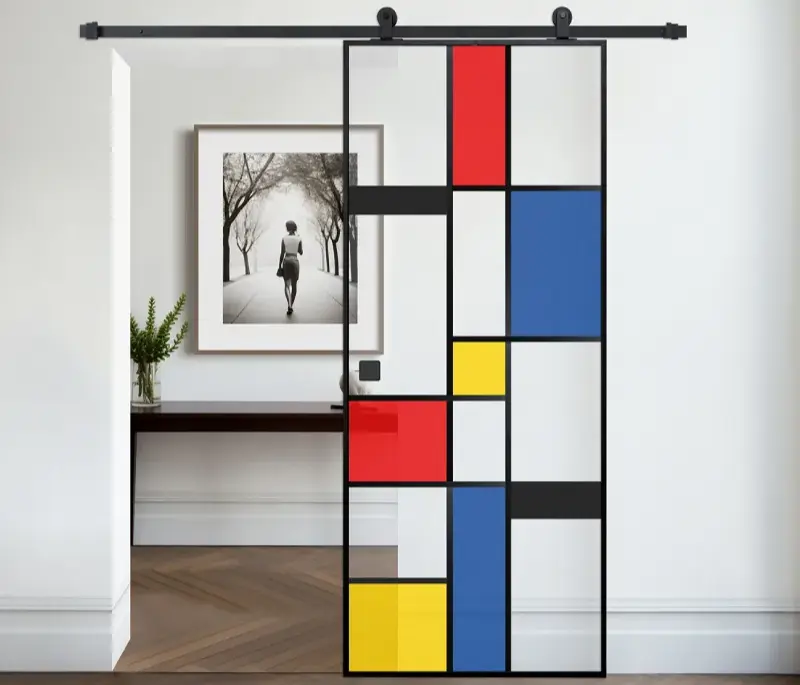
The choice between fluted glass and frosted glass is rarely just a finish decision. In an office, hotel, retail, or apartment entrance, the surface has to control views without making the space feel closed. Daylight, glare, fingerprints, cleaning, safety glass, and the frame all change the result.
A fluted glass vs frosted glass comparison starts with the kind of privacy a room needs. Neither finish should be promised as completely opaque in every condition. Viewing distance, lighting on each side, viewing angle, pattern depth, and the background behind the glass can all affect what remains visible.
How Do Fluted And Frosted Glass Block Views?
Both finishes disturb a clear line of sight in different ways. The difference shows when people move past the door or one side is brighter.
Fluted Or Reeded Glass Keeps A Directional Pattern
Fluted glass has repeated ribs or grooves that bend and break up the view. It can make a person or object difficult to identify while still allowing stronger light and shape cues through the panel. The direction of the ribs matters. Vertical flutes can stretch the visual rhythm of a door, while the depth and spacing of the pattern determine how much detail survives.
A reeded glass door often works well where the design needs a visible screen with a little depth. It can separate a reception area from a work zone, soften a hotel bathroom view, or give an apartment interior a more residential feel. It does not automatically hide every outline, especially when a bright room is viewed from a darker side.
Frosted Glass Diffuses The Image Across The Surface
Frosted glass scatters light across a treated area, so the view tends to lose detail rather than split into repeated bands. A broad acid-etched panel can give a quiet, even appearance. A partial film band or patterned frosting can provide privacy only over selected zones, which may be useful for sidelights, office doors, or meeting-room partitions.
The effect depends on the finish and light. A shadow close to the panel can remain visible, and strong backlighting can reveal movement. A privacy glass door should be judged with a real sample at the intended distance, not from a catalog thumbnail.
Which Finish Preserves More Useful Light?
Light transmission is where the visual difference often affects the floor plan. A finish that blocks too much light may force more artificial lighting; a finish that leaves too much glare or visual activity can make a room uncomfortable. The choice depends on where the panel sits and what the daylight is doing there.
Flutes Can Keep A Stronger Sense Of Daylight
A lightly fluted panel usually keeps more visual connection than heavy frosting. It can move daylight from a windowed corridor into an internal room while maintaining a degree of screening. The ribs also create highlights and shadows under angled sunlight or overhead lighting.
In a video-call room, display area, or bedroom beside a bright window, repeated highlights can become distracting. Check samples at morning and afternoon light, with adjacent finishes selected.
Frosting Can Reduce Detail And Glare, But Not Always Brightness
A light frosted treatment can preserve a soft glow while cutting the sharpness of reflected shapes. Heavy frosting, dense patterns, or multiple treated layers may reduce the amount of useful light more noticeably. For a frosted glass partition, the question is not only how much light passes through, but also the finish keeps the workspace comfortable at the brightest time of day.
Ask for the actual glass sample, surface treatment, and intended orientation. A finish applied to one face can behave differently from a layered build-up. View the sample from both sides, with a light source behind it and a person at the expected privacy distance.
What Is The Difference Between Film, Acid-Etched, And Ceramic-Frit Frosting?
Frosted treatments are not interchangeable in cleaning, durability, or appearance.

Film Is Flexible, But The Surface Needs Care
As for late design changes, privacy film can be cut into stripes, blocks, logos, or gradients. These can be used in the few privacy zones where space is limited. Note, however, that the exposed surface of the film needs to be cleaned with suitable methods and that the edge detail needs to be checked, i.e., where people touch the glass and where moisture collects. Film is a finish layer, i.e., it is not a substitute for safety glass or for an acoustic interlayer.
Acid-Etched Glass Gives A True Matte Surface
Acid-etched glass has a permanently matte face, as the glass surface has been treated. In terms of diffusion, this gives broad, consistent diffusion. However, some matte finishes may show up oil and fingerprint marks more clearly than others. A buyer should confirm whether the selected side has a protective treatment and what cleaning products are allowed.
Ceramic Frit Needs A Design And Durability Check
Ceramic frit is a fired coating that can create dots, bands, or more complete coverage. It can be durable and visually precise, but the color, pattern density, edge tolerance, and glass-processing sequence need approval before production. Do not compare a small frit sample with a large film panel and assume the privacy or light result will match.
What Should Buyers Check In The Door Assembly?
The glass finish is only one component. A commercial opening also includes the glass thickness, safety treatment, frame, fittings, clearances, and cleaning access. These parts need to be reviewed together before the sample is approved.
Match Safety Glass And Hardware To The Finished Leaf
Tempered safety glass or other specified safety glass buildup must be confirmed for the door. Thickness, holes, edges, weight, and associated hardware must then be matched. Details for glass barn door hardware are listed on the glass barn door hardware. This information can be used in the sliding specification; however, the rating for the sliding door must be based on the tested configuration. Therefore, 10 mm and 12 mm tempered safety glass up to 220 lb or 100 kg per door leaf, 304 stainless steel or high-strength carbon steel hardware, and 2 m or 2.4 m rail options are provided for glass barn door hardware.
Metek’s glass sliding barn door line records 100,000 opening and closing tests. Its hidden glass sliding door uses bilateral buffering and is recorded with an in-house 80 kg friction-load test and 50,000 running tests. These figures are product-specific; they do not certify every glass finish or frame.
The finish can change cleaning without changing the structural requirements. The metal frame glass sliding door can protect edges and create a defined visual border, while a frameless door keeps the surface more open but exposes fittings and edge details. Review handle clearance, floor guides, seals, and access around the rail before choosing by appearance alone.
Check Fingerprints, Edges, And Service Access
High-touch doors show marks around the pull, lock, and leading edge. Flutes can hide some small smudges within the pattern, but their grooves may hold dust. A matte, frosted face can show oily contact as a darker patch. In a hotel or shared office, the cleaning team should see the full-size sample and approve the proposed cloths and products.
For repeated openings, confirm how the panel is supported and adjusted, where the floor guide sits, and how a damaged leaf can be removed. The glass door and partition include metal-frame glass doors, frameless glass door, partitions, and sliding systems. Metek also has foam, reinforced cartons, separate hardware packs, glass cases, and custom loading solutions. The glass choice still needs approval against local requirements.
Which Option Fits Different Commercial Interiors?
Room type, traffic, and cleaning cost should guide the choice. Review a sample before releasing the door schedule.
Offices And Meeting Rooms
Fluted glass suits offices that want a textured glass interior door with daylight and visual depth. A textured glass interior door in a corridor needs a sample check for rib direction and light. Frosted glass can be better where screen privacy matters more than visible texture. Neither finish promises sound isolation; door gaps, seals, frames, and adjacent construction control that result.
Hotels, Retail, And Apartments
Hotels often need a privacy glass door that remains easy to clean under frequent handling. Retail fitting rooms may need stronger visual screening at eye level, while apartment bathrooms may benefit from a reeded glass door that brings light into a smaller room. A frosted glass partition can be a good fit for a shared work or service zone when the finish is tested under its actual lighting.
Make The Sample Test A Release Gate
Before bulk ordering, compare fluted and frosted samples at the door size or as close to it as practical. Check both sides, daylight and artificial light, viewing distance, glare, fingerprints, edge appearance, frame color, handle location, and cleaning marks. Record the approved pattern, treatment side, glass thickness, hardware, and tolerances on the door schedule.
A supplier with glass, metal-frame, frameless, and sliding-door experience can coordinate the package after those requirements are clear. Metek has supplied interior door and hardware products since 2011. Its records cover a 12,000 square meter factory, 92 production machines, three testing machines, more than 80 employees, OEM and ODM orders, packaging options, and project support.
FAQ
Q1: Is fluted glass more private than frosted glass?
A1: Not in every setting. Flutes distort shapes and preserve directional light, while frosting diffuses the image more evenly. Pattern depth, lighting, distance, and viewing angle decide the practical result.
Q2: Does frosted glass block more light than fluted glass?
A2: It can, especially with dense frosting or multiple treated layers, but the result depends on the glass and finish. Review a full-size sample in the intended room before ordering.
Q3: What should be checked before approving a textured glass door?
A3: Check privacy from both sides, light and glare, fingerprints, cleaning, glass thickness, safety treatment, frame, hardware capacity, clearances, treatment side, and the replacement plan for the finished pane.





Our Products
Our Products

our testimonials
What They Say About Us

"We trust Metek, have always had a very good relationship with each of you folks;
Metek is reliable, not only as business partner, but also friends.
You can tackle issues; you can go on and move on.
And that’s what’s we did—together with all Metek!"

"Metek is 10 years old, and we have been working with Metek for more than 8 years.
We still welcome progressing and achieve more than what we did last year.
And it is big achievement, which was done at Metek last ten years.
In the next decade, we will keep going and develop the Australian market together."

"To all Metek members
We now work six years together,we still grow together with Metek, with one of our best suppliers in China.
Why are you one of the best?
It’s because you help us to create our market; you help us to create new products; and you help us to get the right quality; you help us to wonder our issues.
You know, you are all very good educators; you understand our language; you understand us as customer.
And I think that makes the partnership show you are together.
And I hope for the next years, we can still work together, and move on together into your future creative, beautiful products."