
News
Contact UsHidden Door vs Pocket Door: Which System Works Better for Minimalist Interiors
-
 author
- 10 August 2026

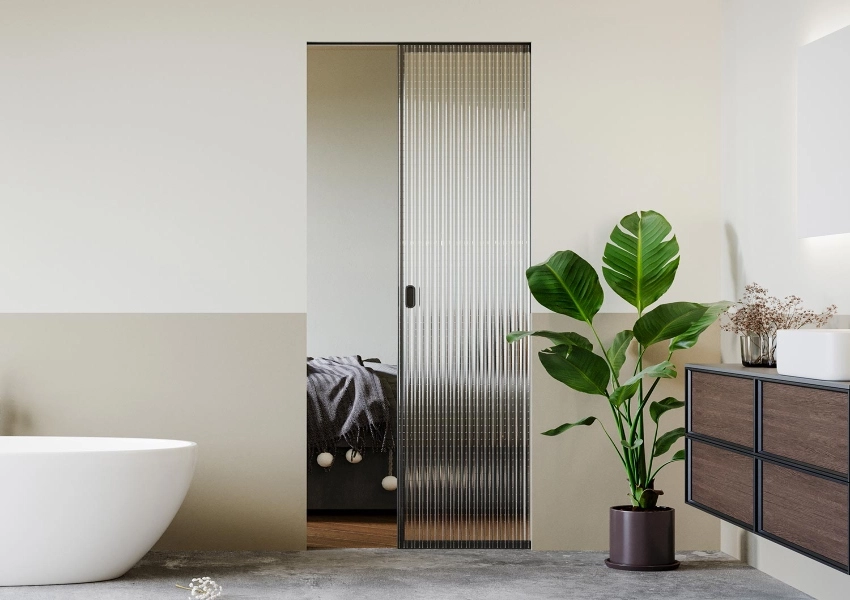
Minimalist interiors make doors harder to choose, not easier. Once the wall line is clean, every exposed track, casing, handle, floor guide, and shadow gap becomes visible. That is why the hidden door vs pocket door question comes up so often in apartments, villas, hotels, showrooms, and office fit-outs. Both systems can save swing space. Both can look quiet. The better choice depends on where the door moves, what the wall can carry, and how the hardware can be serviced later.
A hidden door usually slides along the wall with a concealed track or rear-mounted rail, leaving the hardware out of sight. A pocket door slides into a wall cavity, disappearing when it is open. The first creates a floating panel effect. The second clears the opening completely. For a minimalist interior door, that difference matters more than the product name.
The Real Difference Is Where The Door Goes
A pocket door needs a framed cavity beside the opening. When open, the panel moves into that space, so the wall beside the doorway cannot be filled with plumbing, heavy electrical runs, deep switches, blocking, or structural elements that conflict with the pocket. In return, the floor and wall area outside the opening stays free. It is a strong option for compact bathrooms, closets, laundry rooms, and corridors where furniture placement is tight.
A hidden door keeps the panel outside the wall cavity. The door slides across the wall face, but the rail, rollers, and guide are concealed by the panel or hidden within the system. That makes it easier to use on existing walls, feature walls, and retrofit projects where cutting a full pocket is expensive or risky. The trade-off is simple: wall surface beside the opening must stay clear so the panel has somewhere to slide.
For projects comparing an invisible sliding door with a pocket system, the first site check is not style. It is the available wall condition. If the wall is already built and cannot be opened, a concealed track door may be more practical. If the project is still at framing stage and clean usable floor area is the priority, a pocket door can be the cleaner long-term layout.
When A Hidden Door Looks Cleaner
A hidden sliding system works best when the design goal is a calm wall plane with a little architectural surprise. The door is visible as a panel, but the movement hardware is not. That suits TV walls, bedroom entries, pantry doors, study rooms, wardrobe zones, and gallery-like interiors where visible barn-door hardware would feel too rustic or too busy.
Retrofit Walls Usually Favor Concealed Tracks
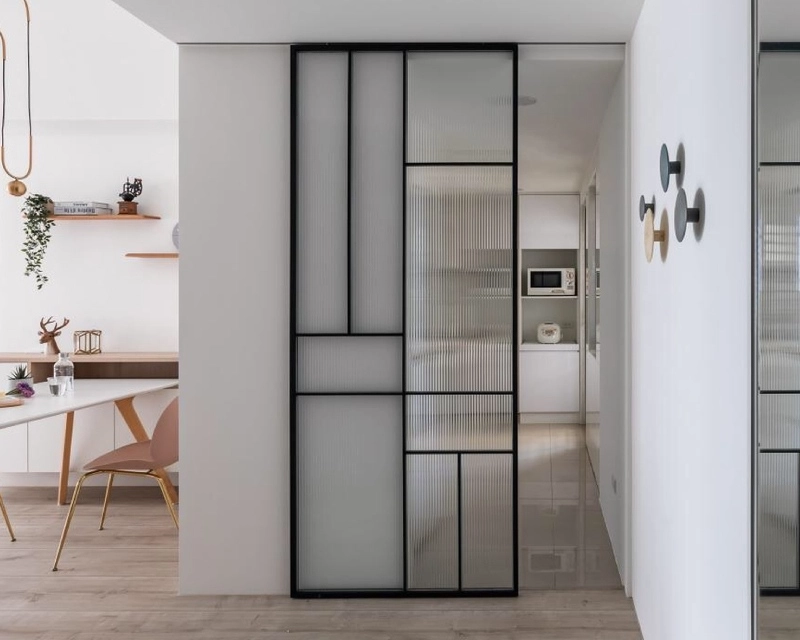
Metek’s ghost door sliding system uses a hidden track and roller mechanism behind the door leaf, with concealed hardware, a trackless floor look, soft-close movement, and an 80 kg weight capacity. It is aimed at a floating-door effect without visible top tracks or floor grooves. That is exactly where a concealed track door earns its place: the opening still reads as a designed panel, but the mechanical parts stay out of view.
This system is also useful when the door face needs to match the wall, a wood finish, a glass panel, or a painted surface. In luxury residential or boutique commercial interiors, that can be more convincing than a pocket opening, especially when the designer wants the closed door to remain part of the wall composition.
When A Pocket Door Works Better
A pocket door is stronger when the open position matters more than the closed panel. Once open, the door disappears into the wall. There is no panel parked across shelving, artwork, cabinetry, or a light switch. That is why the pocket door often wins in small rooms where every side wall has a job. The opening also feels wider and less interrupted, which helps in tight circulation routes.
Metek’s pocket door sliding system is built around a hidden wall cavity and a reinforced frame. It has a galvanized steel and reinforced aluminum frame, a top-hung aluminum track, 100 kg weight capacity, and compatibility with common 2×4 and 2×6 stud wall construction. For project buyers, those details matter because a pocket door is only as good as the wall pocket around it.
The downside is service access. The most common worry with pocket systems is hardware hidden inside the wall. If rollers fail or the track needs adjustment, poor designs can force trim removal or even wall opening. A better interior sliding pocket door system should allow track or roller access without major demolition. That one detail can separate a tidy installation from an expensive maintenance call three years later.
Hardware, Wall Tolerance And Service Access
The hidden door vs pocket door decision often turns on tolerances. Minimalist design leaves little room to hide installation errors. If the wall is not flat, the reveal around an invisible sliding door may look uneven. If the floor is out of level, a floating panel can show a changing bottom gap. If the pocket frame twists, the door may rub inside the cavity or fail to close flush.
A concealed track door needs a strong panel, accurate mounting, smooth rollers, controlled bottom guidance, and enough wall clearance. A pocket door needs a straight frame, proper stud depth, stable track fixing, plumb jambs, and good protection against wall bowing. Soft-close hardware is valuable in both systems, but it cannot rescue poor framing.
Metek works with barn door hardware, sliding doors, metal frame glass doors, wood doors, acoustic panels, and shower-room products. Its factory covers 12,000 square meters, with 92 production machines, 3 testing machines, and more than 80 employees. The company also references CE, FSC, ANSI-BHMA, EN 12600, Proposition 65, TPCH, and third-party testing for selected models. For buyers handling hotels, apartments, or retail projects, that background is useful because hardware, panels, packaging, testing, and delivery need to stay coordinated.
How Project Buyers Should Specify The System
A minimalist interior door should never be specified from a photo alone. The drawing should state opening width and height, wall thickness, panel weight, door thickness, finished floor level, skirting detail, handle type, soft-close requirement, and access expectations for future maintenance. If a concealed track door is used, the clear slide area beside the opening should be marked. If a pocket door is used, the wall cavity and services route should be confirmed before framing is closed.
Packaging Affects Breakage and Install Speed
For distributors and contractors, packaging also matters. Door panels, glass, and hardware are easy to damage if packed as loose mixed parts. Metek describes door and hardware packed together, hardware packed individually, reinforced cartons, foam, wooden cases for glass or door panels, and retail display packaging. That is not decorative information. It affects breakage, labeling, installation speed, and how replacement parts are handled on site.
A practical buying route is to shortlist both systems from interior door systems, then match them to the room. Use an invisible door sliding system when the wall face is part of the design and a floating concealed movement is wanted. Use a pocket system when an open doorway must disappear, and the wall can be built around a proper cavity. For custom drawings, packaging, samples, or mixed door schedules, contact the team before final site dimensions are locked.
The final choice is not about which name sounds more minimal. A ghost door system is often better for retrofit walls, feature panels, and visible design moments. A pocket door is often better for compact rooms and clean open circulation. The best result comes when the door system is chosen after the wall, hardware access, panel weight, and maintenance route are known. That is where minimalist design stops being an image and becomes a working interior detail.
FAQ
Q1: Is a hidden door the same as a pocket door?
A1: No. A hidden door usually slides along the wall with concealed hardware. A pocket door slides into a wall cavity and disappears when open.
Q2: Which one is better for a small minimalist interior door?
A2: A pocket door often saves more usable wall and floor space, but only if the wall cavity can be built correctly and kept serviceable.
Q3: When should a concealed track door be chosen instead?
A3: Choose it when the wall cannot house a pocket, the door face is part of the design, or a floating invisible sliding door effect is preferred.





Our Products
Our Products

our testimonials
What They Say About Us

"We trust Metek, have always had a very good relationship with each of you folks;
Metek is reliable, not only as business partner, but also friends.
You can tackle issues; you can go on and move on.
And that’s what’s we did—together with all Metek!"

"Metek is 10 years old, and we have been working with Metek for more than 8 years.
We still welcome progressing and achieve more than what we did last year.
And it is big achievement, which was done at Metek last ten years.
In the next decade, we will keep going and develop the Australian market together."

"To all Metek members
We now work six years together,we still grow together with Metek, with one of our best suppliers in China.
Why are you one of the best?
It’s because you help us to create our market; you help us to create new products; and you help us to get the right quality; you help us to wonder our issues.
You know, you are all very good educators; you understand our language; you understand us as customer.
And I think that makes the partnership show you are together.
And I hope for the next years, we can still work together, and move on together into your future creative, beautiful products."