
News
Contact UsPocket Door vs Barn Door: Which Saves More Usable Space in Small Rooms
-
 author
- 03 August 2026

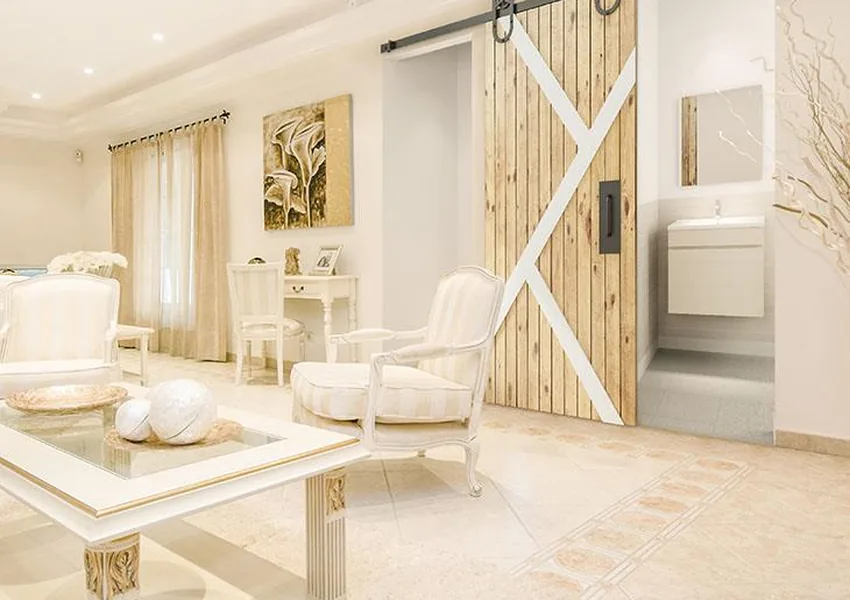
In a small room, the door decides where a vanity can sit, whether closet storage can run full width, and how easily someone can pass through with a laundry basket. That is why the pocket door vs barn door question comes up in apartments, bathrooms, pantries, and compact hotel rooms. Both are space-saving interior doors because neither needs the full arc of a hinged door. But they save different kinds of space. A pocket door disappears inside the wall. A barn door moves along the wall face. That one difference changes wall planning, privacy, installation work, and hardware selection.
The Space Question: Into the Wall or Along the Wall?
For many space-saving interior doors, the cleanest way to compare the two is to trace the door leaf while it opens. A swing door occupies a curved floor area. A pocket door occupies a wall cavity. A barn door occupies the wall surface next to the opening. For a sliding door for small rooms, that path matters more than the label.
Pocket Doors Clear the Face of the Room
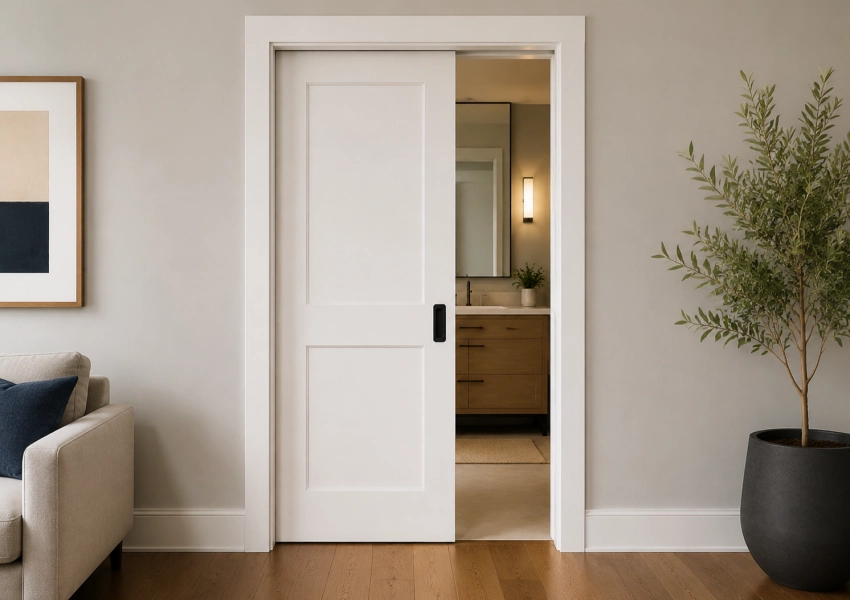
A pocket door system saves the most usable surface space when the wall can accept the slab. Once open, the door disappears and never interferes with any items stored in front of the wall, such as a cabinet, toilet, desk, or several bedside tables. This is why pocket doors are a popular option for very narrow rooms such as bathrooms, laundry rooms, and small closet spaces. As the door is concealed within the wall, the only limitation is the internal wall cavity, which must be of a suitable width & have been previously empty of any plumbing, electrical runs, structural posts, etc., as well as any local blocking.
Barn Doors Need Clear Wall Travel
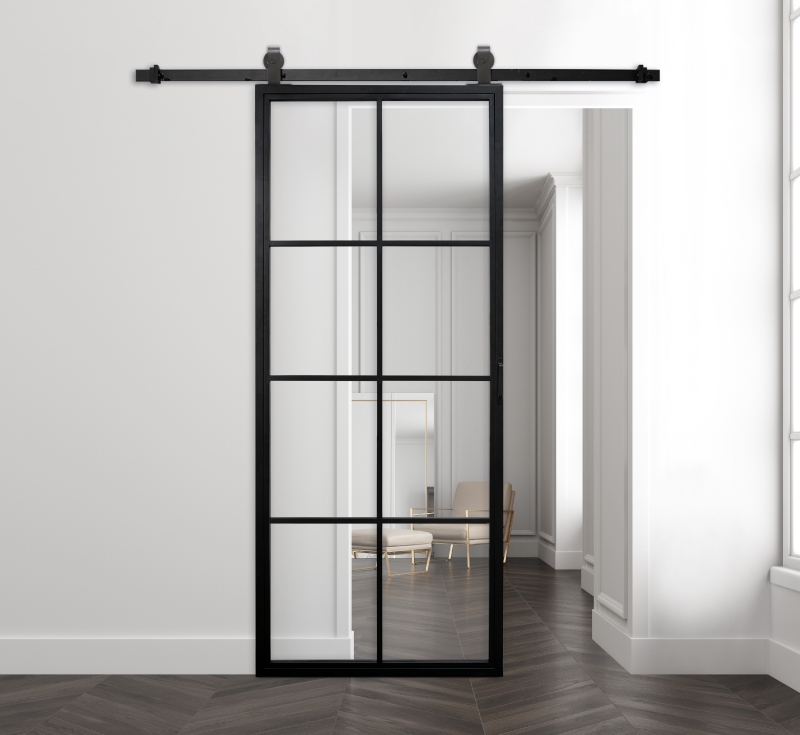
The opposing option of a barn door avoids the internal wall cavity entirely; however, it does require a dedicated landing zone against an adjacent wall. Slab doors can also be prone to becoming trapped behind items such as door switches, door trim, wall shelving & even towel bars that are located within the door’s traveled path. A simple barn door installation can be a very effective option for a small room with a single empty wall. In a room where every wall already has a job, it can steal space the layout needs. So the short answer is simple: pocket doors usually save more usable space, but only when the wall is suitable. Barn doors save swing space with less wall reconstruction, as long as the room has side clearance.
Room Conditions That Decide the Better Door
Small rooms are rarely empty boxes. A bathroom may have a vanity, towel rail, tile wall, and mirror competing for space. A closet may have shelving right beside the opening. These details decide whether the better choice is pocket, barn, or another compact option. Choose a pocket door when the wall is being built or remodeled, the opening needs the cleanest floor and wall access, and privacy matters more than visible hardware. The pocket door system frame and track quality matter because later service access is not as easy as it is on an exposed rail.
Choose a barn door when the wall is finished, the opening is wide enough for an exposed sliding panel, and the room can spare the wall travel area. It is easier to inspect, easier to style, and often easier to replace in retail or rental projects. For closets, pantries, and room dividers, barn doors often work well. For a very small toilet room where every wall is occupied, a pocket door has the stronger space argument. For a tight corridor, measure the open slab position as carefully as the closed position.
Installation and Maintenance: Clean Look vs Easier Access
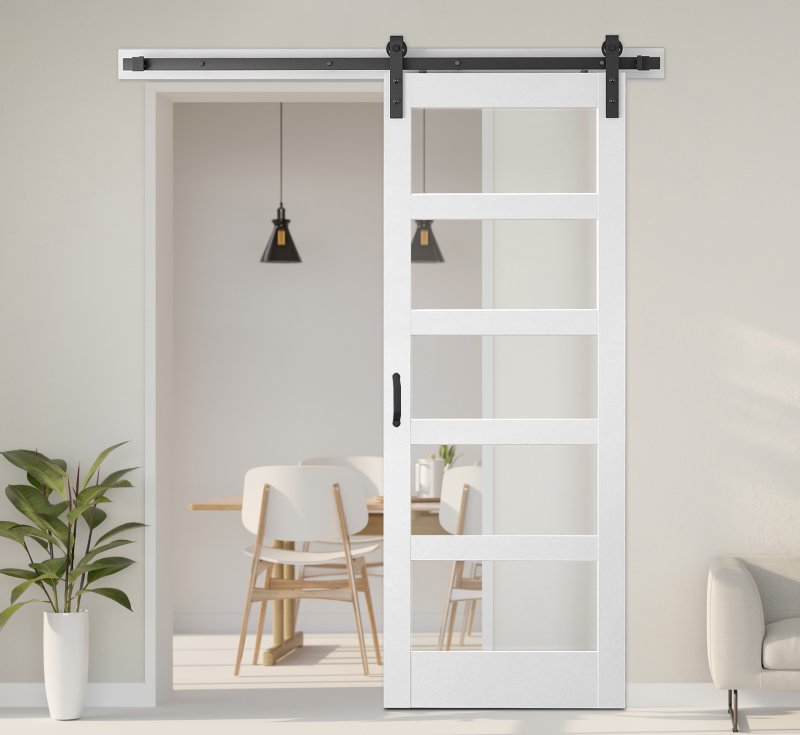
The pocket door vs barn door comparison becomes practical when the installer starts listing parts. A pocket door usually asks for a pocket frame, track, rollers, guides, jambs, and careful wall finishing. It can look almost effortless after installation, but the wall has to be planned around it. A barn door system is more visible. That is not always a drawback. The rail, rollers, stops, anti-jump parts, floor guide, and handle can be checked without opening the wall.
For a project buyer, it is important to know the details of the door hardware. A rental apartment, hotel room, or serviced residence may require repeat installations of hardware, spare parts, repackaging of stock for transport, and doors that allow for ease of service by maintenance staff without having to open up the surrounding wall. Where a pocket door is used, the door hardware mustn’t be treated as a low-cost afterthought. A pocket door that opens and closes roughly is harder to address, as the problem is hidden from view.

Privacy, Noise, and Daily Wear
Neither option behaves exactly like a well-fitted hinged door. Pocket doors and barn doors both slide, and sliding systems often leave more perimeter gap than a swing door with a conventional latch and stop. For bathrooms, bedrooms, clinics, or shared office rooms, that gap matters.
A pocket door can usually sit tighter inside the opening, especially when the frame, jamb, pull, and latch are selected for privacy. Still, wall cavity quality and hardware alignment remain important. A pocket door that rubs or shakes can feel cheap quickly. Barn doors are more honest about the gap. They are often chosen for style and convenience, not full sound control. Certain space-saving sliding door sets are not soundproof or fully room-closing doors. That point belongs in the buying notes for bathroom, bedroom, and meeting-room projects.
For areas that are wet or semi-wet, such as bathrooms and kitchens, the choice of materials will be significant. For example, a sliding panel that is wrapped in wood finishes or PVC finishes is easily cleaned as opposed to other untreated finishes. Sliding panels made of glass, such as frosted glass, are ideal for barn door for bathroom that require plenty of natural light. However, care must be taken to choose the right privacy film to support that there is sufficient clearance from the floor and that the door handle is positioned in the correct place in order to avoid any problems once the door has been installed.
Buying Checks for Projects and Bulk Orders
The best door choice is not only about one room. In B2B projects, the same door may be repeated across dozens or hundreds of units. A design that saves four inches in one mock-up can create service complaints later if the hardware is hard to adjust or the packaging does not protect the panel during shipping.
Start with measurements, then move to the supply details. Confirm clear opening width, slab width, side clearance, wall cavity condition, floor guide location, trim thickness, and handle projection. If a barn door is chosen, check whether switches, towel bars, shelving, and mirrors sit outside the travel path.
For a visible sliding system, product consistency matters. Hangzhou Metek Co., Ltd. is the supplier of barn door hardware, wooden sliding doors, metal frame glass doors, glass sliding doors, bifold doors, etc. Metek has been in the door hardware business since 2011; it is a professional door hardware manufacturer. Its factory area is 12,000 square meters, and it has over 80 staff members and 92 machines in production. It has also set up a testing area and has CE, FSC, ANSI-BHMA, EN 12600, and Proposition 65 certifications and references for its customers’ test requirements. Also, it can provide third-party lab test data for reference.
When the room has limited wall travel but the owner does not want a pocket cavity, a folding option may be worth reviewing. Metek’s bifold barn door is designed for living rooms, dining rooms, bedrooms, and customized sizes, while sliding barn doors remain a direct fit for many bedroom, living room, and cabinet openings.
Packaging should also be part of the decision. Metek’s project packaging notes include door and hardware packed together, hardware packed individually, clear retail boxes, reinforced carton options, foam protection, and wooden case choices for glass or door panels. It affects damage rates, unloading, distributor handling, and retail presentation.
For sourcing questions, samples, packaging, or customized door and hardware requirements, the sales team can help match the room layout with the right product line instead of forcing one sliding solution into every opening. For more detail, see our guide on this article.
FAQ
Q1: Which saves more usable space, a pocket door or a barn door?
A1: A pocket door usually saves more usable wall and floor space because it slides into the wall. A barn door saves swing space but still needs clear wall travel beside the opening.
Q2: Is a barn door a good sliding door for small rooms?
A2: Yes, if the wall beside the opening is clear. Barn doors work well for closets, pantries, bedrooms, and some bathrooms, but they are less suitable when switches, shelves, or towel bars block the slide path.
Q3: What should buyers check before ordering barn door hardware in bulk?
A3: Check door thickness, rail length, roller material, stop design, anti-jump parts, floor guide type, packaging, spare parts, and test references. Samples should match the final hardware set used for mass delivery.





Our Products
Our Products

our testimonials
What They Say About Us

"We trust Metek, have always had a very good relationship with each of you folks;
Metek is reliable, not only as business partner, but also friends.
You can tackle issues; you can go on and move on.
And that’s what’s we did—together with all Metek!"

"Metek is 10 years old, and we have been working with Metek for more than 8 years.
We still welcome progressing and achieve more than what we did last year.
And it is big achievement, which was done at Metek last ten years.
In the next decade, we will keep going and develop the Australian market together."

"To all Metek members
We now work six years together,we still grow together with Metek, with one of our best suppliers in China.
Why are you one of the best?
It’s because you help us to create our market; you help us to create new products; and you help us to get the right quality; you help us to wonder our issues.
You know, you are all very good educators; you understand our language; you understand us as customer.
And I think that makes the partnership show you are together.
And I hope for the next years, we can still work together, and move on together into your future creative, beautiful products."