Welcome
12 DECEMBER

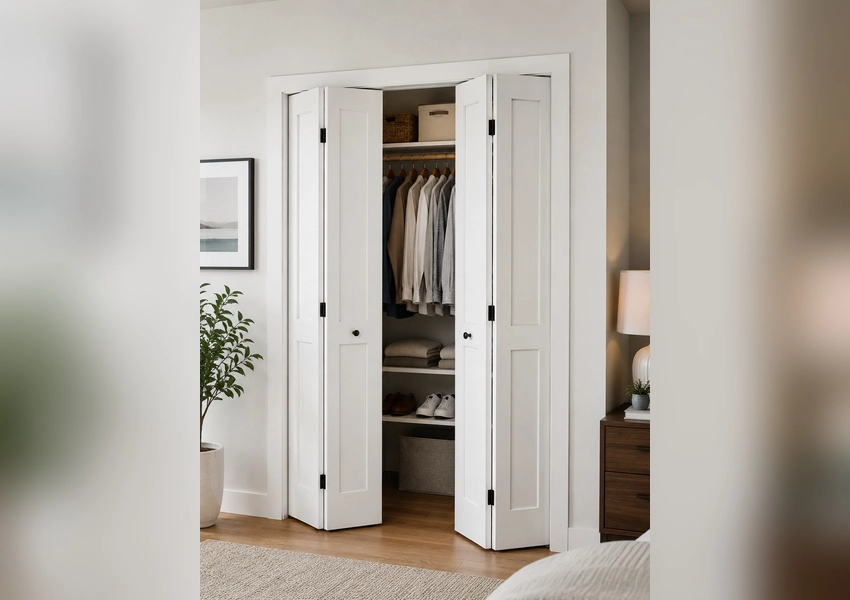
Advantages & Disadvantages Of PVC Folding Doors

PVC folding doors are a common type of interior door, utilized in both residential and commercial spaces due to their material and structural characteristics. Their advantages and disadvantages are quite evident, making them suitable for various usage scenarios. The following analysis will cover aspects such as material, functionality, installation, and maintenance to help readers better understand this product.
1.Advantages of PVC Folding Doors
(1) Relatively Low Cost
The manufacturing cost of PVC folding doors is lower, resulting in market prices that are generally more affordable than solid wood or metal doors. This makes them an economical choice for budget-conscious households or commercial establishments.
(2) Lightweight and Easy to Install
The low density of PVC material contributes to the overall lightweight nature of the folding doors. This not only reduces transportation costs but also simplifies the installation process, allowing for potential self-installation in some cases, thereby minimizing labor expenses.
(3) Good Waterproof and Moisture Resistance
PVC material inherently possesses good waterproof properties and is less prone to deformation from moisture, making it suitable for areas with high humidity, such as bathrooms and kitchens. Compared to wooden doors, PVC folding doors demonstrate greater durability in damp environments.
(4) Diverse Styles and Color Options
PVC can be produced in various colors and textures through spraying or lamination processes, such as wood grain or solid colors, catering to different decorative style requirements.
(5) Space-Saving
The opening and closing mechanism of folding doors allows them to save more space compared to hinged doors. For small units or narrow passages, folding doors can reduce the area occupied when opened, enhancing space utilization.
2.Disadvantages of PVC Folding Doors
(1) Limited Durability
Although PVC is waterproof, its impact resistance and wear resistance are inferior to those of metal or solid wood materials. After prolonged frequent use, the hinges may become loose, and the door surface may develop scratches.
(2) Average Sound Insulation
The lower density of PVC results in sound insulation performance that is not as effective as that of solid wood doors or doors with higher density fillings. If privacy or a quiet environment is a priority, PVC folding doors may not be the best choice.
(3) Poor High-Temperature Resistance
PVC tends to soften and deform in high-temperature environments, making it unsuitable for installation near heat sources, such as next to stoves or in areas with strong direct sunlight.
(4) Inferior Texture Compared to High-End Materials
While PVC can mimic wood grain or other materials, the tactile and visual effects still differ from those of solid wood or metal, which may affect the overall aesthetic quality of the decor.
3.Frequently Asked Questions
(1) Where are PVC folding doors suitable for use?
They are suitable for areas where sound insulation is not a high priority but where space-saving or waterproof properties are needed, such as bathrooms, storage rooms, and balcony partitions.
(2) What is the lifespan of PVC folding doors?
Under normal usage and maintenance conditions, the lifespan of PVC folding doors typically ranges from 5 to 10 years, depending on usage frequency and environmental conditions.
(3) How should PVC folding doors be cleaned and maintained?
Regular cleaning can be done with a damp cloth, avoiding corrosive cleaning agents. It is advisable to periodically check the hinges and tracks, lubricating them as needed to reduce wear.
4.Purchasing Recommendations
When considering the purchase of PVC folding doors, the following aspects should be taken into account:
– Observe the thickness of the door panels; generally, thicker panels offer better stability.
– Check the quality of the tracks and hinges to ensure smooth operation.
– Choose appropriate colors and surface treatments based on the usage environment.
In summary, PVC folding doors offer advantages in terms of price, weight, and waterproofing, but they have limitations in durability and sound insulation. It is essential to weigh the pros and cons in relation to individual needs before making a decision.
 
05 DECEMBER

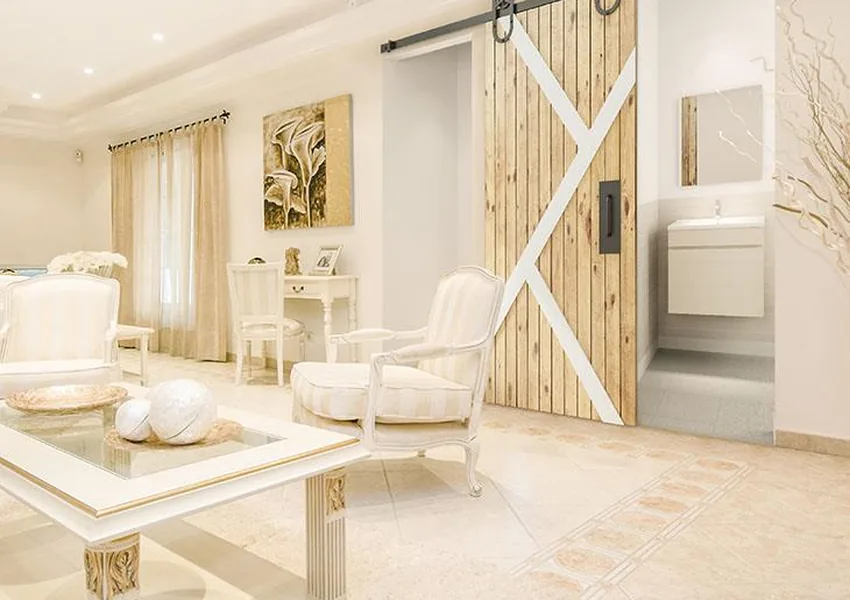
Everything You Want To Know About Barn Doors

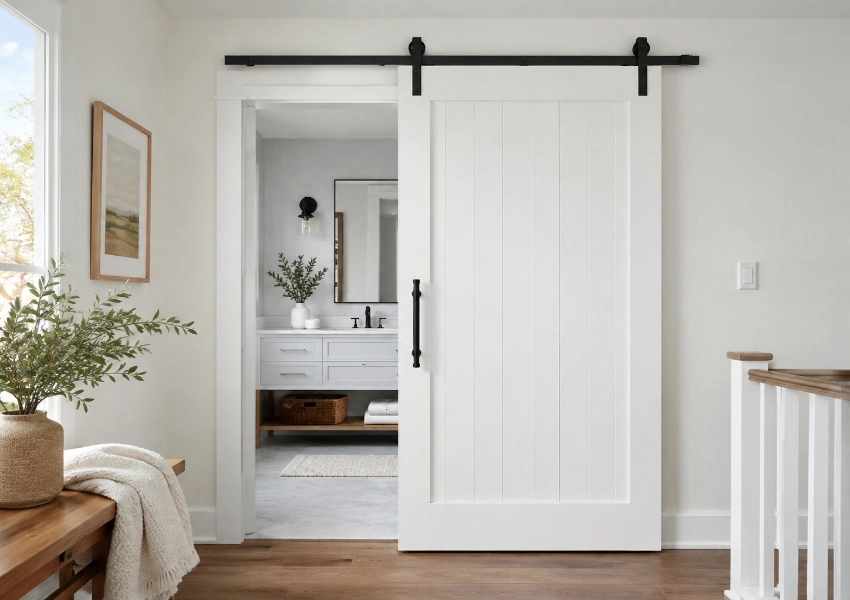
Barn Door, based on the design of traditional barn sliding doors, has been adapted for modern homes, commercial spaces, and industrial-style decor. The main features are as follows:
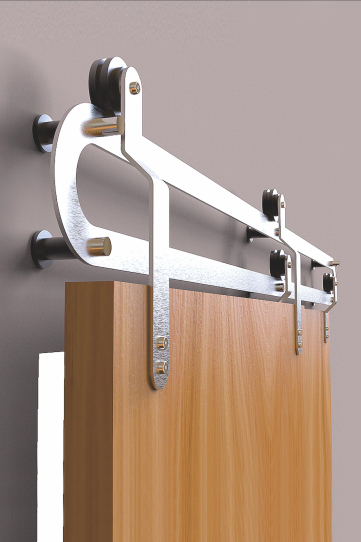
1.Appearance Style: Typically made from wood and metal materials, the panels not only possess natural textures and a vintage feel but also feature modern minimalist designs. The door panels are slightly wider than the door openings, enhancing their decorative appeal. Exposed track models are often paired with vintage metal tracks and rollers, embracing their visibility as part of the design.
2.Opening Mechanism: The doors are suspended on the inner side of the track and slide horizontally, thus not occupying internal space. They are suitable for partitions, wall recesses, wardrobe doors, cabinet doors, kitchen and bathroom doors.
3.Applicable Scenarios: Ideal for tight spaces, particularly in limited layouts. Due to the width of the door panels, they are often used decoratively in modern living room partitions, studies, walk-in closets, and storage rooms.
Advantages and disadvantages are as follows:
Advantages: No need to reserve space for door swing, simple materials, and easy installation and modification.
Installation is relatively simple, and the transformation is flexible and varied.
With a distinctive style, it significantly enhances the design aesthetic of the indoor space.
However, there are some drawbacks:
– Poor density, typically resulting in gaps between the door and wall, which not only affects sound insulation but also odor isolation. This approach is not suitable for bathrooms or areas requiring high privacy.
– Limited load-bearing capacity, relying on the track and wall for support, necessitating strong wall integrity.
– There is a risk of pinching fingers, especially for children or pets, due to the gaps in the track.
Additionally, it is important to note:
– The wall must meet installation requirements, needing to be a load-bearing wall or solid wall to ensure adequate support.
– The door opening should generally accommodate wider door frames; barn doors for narrower openings may lack aesthetic and functional effectiveness.
– The quality of hardware, including tracks and rollers, directly impacts the lifespan and smooth operation.
Modern Variants:
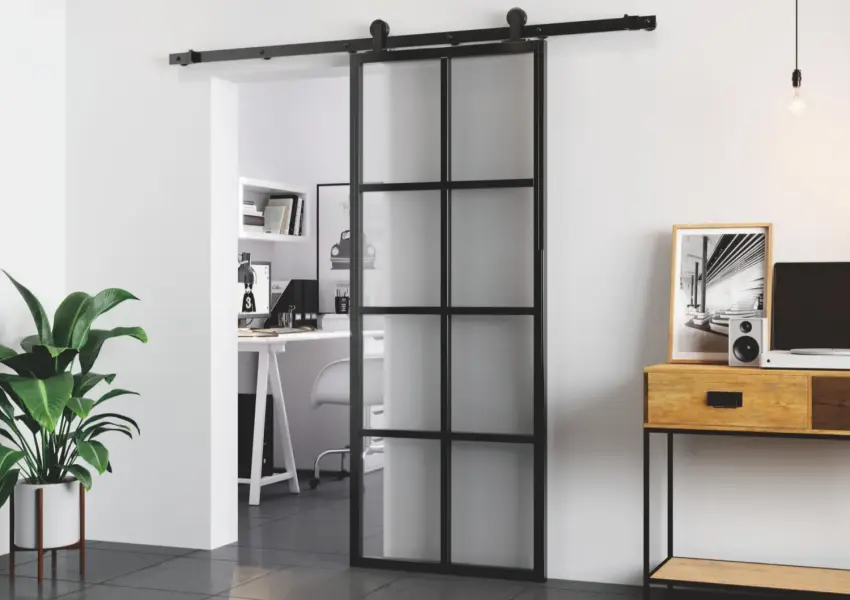
– Glass Barn Doors: Incorporating glass elements to enhance light transmission.
– Stealth Track: A simplified design with concealed tracks for added privacy.
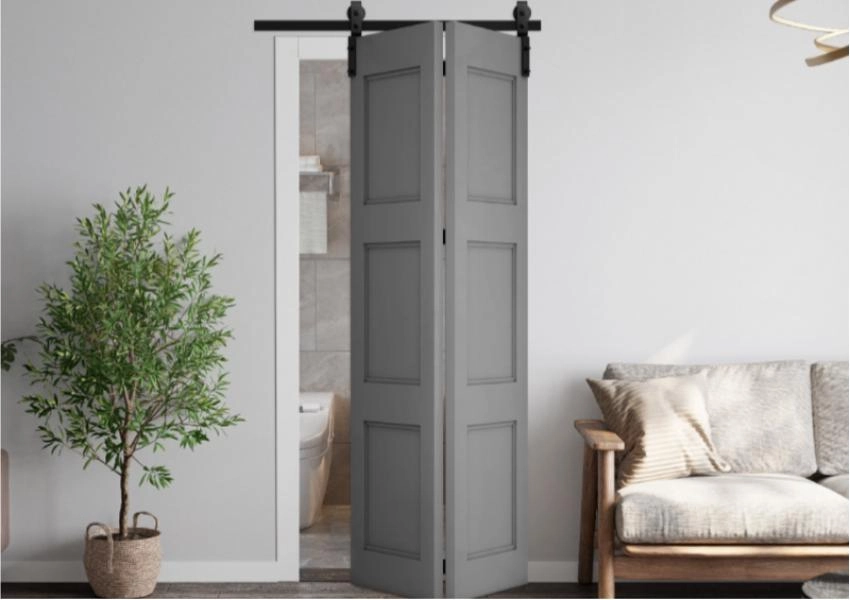
– Double Door Operation: For larger openings, bi-fold barn doors can be utilized.
In conclusion, barn doors represent a design choice that combines decoration and practicality, suitable for spaces with limitations.
19 SEPTEMBER

What Material Is Better For Acoustic Panels

There are many types of materials for sound-absorbing panels, and careful selection is necessary when purchasing. What material is better for sound-absorbing panels?
Wooden sound-absorbing panel:
It is finely processed based on acoustic principles and consists of a decorative surface, core material, and sound-absorbing felt.
Mineral wool sound-absorbing board:
The surface treatment forms are diverse, and the board has a strong decorative effect.
Fabric sound-absorbing panel:
The core material is centrifugal glass wool, which has been widely used as an acoustic material around the world for a long time and has been proven to have excellent sound absorption performance.
Polyester fiber sound-absorbing panel:
Its raw material is 100% polyester fiber, which has the advantages of sound absorption, environmental protection, flame retardancy, thermal insulation, easy construction, good stability, impact resistance, good independence, and high cost-effectiveness. There are a variety of colors to choose from.
Ceramic aluminum decorative sound-absorbing panel:
A special panel made of a combination of various inorganic materials, with inorganic materials as the main material. It is made by adding conductive materials such as conductive porcelain clay powder and conductive mica powder, reinforcing fibers, and using inorganic adhesives to bond and naturally cure. Multiple different decorative materials are then compounded on its surface.
05 SEPTEMBER

PT DOOR: Redefining Space Utilization With Innovative Solutions

In contemporary residential and office environments, space has become a scarce resource. Whether it is a compact urban apartment, a multi-functional studio, or a commercial venue requiring flexible adjustments, efficiently utilizing every inch of space has become a core challenge in design. As a door system focused on space optimization, PT DOOR is redefining people’s perception of door functionality through its unique design philosophy and technological innovations, providing efficient space-saving solutions for various spaces.​
The space-saving capability of PT DOOR is first reflected in its revolutionary folding and sliding structure. Traditional swing doors require a fan-shaped space of more than 1.5 times the door width when opened, which often causes great inconvenience in narrow bathrooms, kitchens, or corridors-opening the door may hit furniture at the corner or force users to 侧身避让 when passing through. In contrast, PT DOOR adopts a multi-section folding design. When opened, the door can fold inward or outward along the track, and the finally folded volume is only 1/3 to 1/4 of that of a traditional door. For example, a standard PT DOOR with a width of 90 cm only occupies about 25 cm of space when fully folded, which is equivalent to freeing up a position for a small side table or storage shelf behind the door. This design is especially suitable for partitions between bedrooms and balconies in small apartments, ensuring privacy while avoiding the space extrusion of traditional doors on the balcony’s green area or laundry area.​
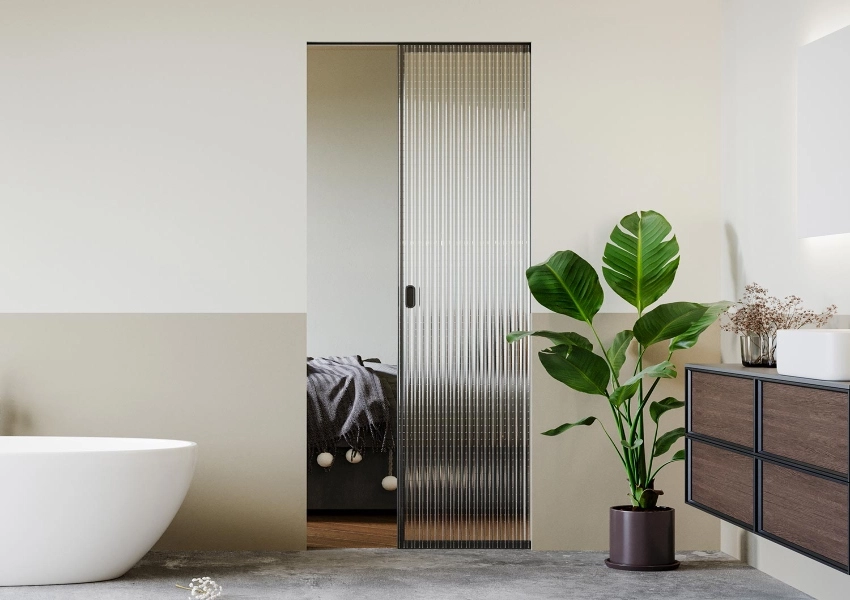
In addition to the folding structure, the track system and installation method of PT DOOR also contain clever ideas for space optimization. Its top track adopts an embedded design, which can seamlessly connect with the ceiling or door frame. There is no need to install a sliding track on the ground, completely solving the problems of dust accumulation and tripping caused by traditional sliding door tracks, while freeing up a complete flat space on the ground. This feature makes PT DOOR particularly suitable for areas that require frequent cleaning, such as between kitchens and dining rooms. The unobstructed design of the ground not only facilitates the passage of floor-sweeping robots but also allows furniture (such as dining tables and sideboards) to be placed closer to the door, virtually increasing the area of the activity space. In office scenarios, PT DOOR installed between meeting rooms and open office areas can be completely folded into wall recesses when opened, integrating the two spaces to meet the needs of large team meetings; when closed, it forms a closed soundproof environment without occupying any additional activity space.​
The customized adaptation capability of PT DOOR further enhances the effect of space saving. For non-standard size door openings (such as sloped attic roofs and curved walls), its modular components can flexibly adjust angles and lengths, avoiding waste caused by mismatches between the door and the space. For example, in a duplex apartment with low floor height, PT DOOR can be designed as an upward-swinging folding structure. When opened, it folds upward under the ceiling, without occupying vertical space, ensuring that users do not feel oppressed when passing through. In addition, its surface material can be synchronized with the color and texture of walls and furniture. When the door is closed, it can form a “invisible” effect visually, reducing the sense of crampedness caused by space division, which is especially suitable for the integrated design of living rooms and studies in small apartments.​
In terms of multi-functional integration, PT DOOR combines door functionality with storage needs, further improving space utilization. Some models embed magnetic storage racks or folding workbenches on the side of the door. When closed, they can be used as wall decorations; when opened, they become temporary operation platforms-in the kitchen, this design can be used to place condiment bottles; in the study, it can be used as a temporary stand for laptops. For bathrooms with limited space, PT DOOR can also integrate mirrors and storage cabinets. The outer side of the door is an anti-fog mirror, and the inner side is a layered storage compartment, which not only saves space for installing a separate mirror cabinet but also ensures convenient use.​
From the perspective of long-term use costs, the space-saving characteristics of PT DOOR indirectly reduce the hidden costs of living and office use. In spaces of the same area, the layout using PT DOOR can accommodate more functional areas, reducing the need for replacement due to insufficient space; in commercial venues, the flexible door design can quickly adjust space partitions to adapt to different business scenarios (such as switching from an open exhibition hall to a closed meeting room), thereby improving the use efficiency of the venue. In addition, its durability and low maintenance costs ensure stability in long-term use, avoiding space idleness caused by door failures.​
The space-saving solution of PT DOOR is not a simple superposition of technologies, but based on a deep understanding of the interaction between people and space. Through structural innovation, customized design, and functional integration, it transforms traditional doors from “space obstacles” into “space optimizers”, injecting more possibilities into various spaces without sacrificing the user experience. Whether it is a compact living environment or an efficient office space, PT DOOR, with its unique design philosophy, proves that “small spaces” can also have a “grand pattern”.​
30 AUGUST

PVC Folding Doors – A Tailor-Made Space Solution For Southeast Asian Lifestyles

In the warm and humid climate of Southeast Asia, the choice of doors for residential and commercial spaces needs to not only adapt to the high-temperature and rainy environment but also balance spatial flexibility and aesthetics. Today, we are proud to launch our new PVC folding door product specially developed for the Southeast Asian market. It not only integrates advanced production technology but also deeply caters to the local living needs and usage scenarios, injecting new vitality into your space.
I. Core Product Advantages: Multiple Features Adapted to Southeast Asia
1.Superb Weather Resistance to Tackle Climate Challenges
Southeast Asia has a year-round high temperature, heavy rainfall, and high humidity. Ordinary doors are prone to problems such as deformation, mildew, and corrosion. However, our PVC folding doors are made of high-purity PVC composite materials and undergo special anti-aging and anti-corrosion treatments. In high-temperature environments above 40°C, the door body is not easy to soften and deform; in the face of frequent rainfall, the surface waterproof coating can effectively block water penetration and prevent mildew in the internal materials; even in coastal areas, it can resist salt erosion caused by sea breezes, extending the service life to more than 10 years and significantly reducing replacement costs.
2.Flexible Folding Design to Optimize Space Utilization
Whether it is a compact residential balcony, kitchen, or commercial places such as shops, restaurants, and hotels, space utilization is crucial. Our PVC folding doors adopt a multi-panel linked folding structure. When opened, they can be fully folded to one side without occupying additional space, allowing seamless connection between the balcony and the living room, and enabling the shop front to be fully open to attract customers. When closed, they can be tightly shut to effectively separate spaces and isolate noise. At the same time, the door body is lightweight, and it slides smoothly without jamming when pushed, making it easy for the elderly and children to operate.
3.Safety and Environmental Protection to Safeguard a Healthy Life
We always prioritize safety and environmental protection. The product uses food-grade PVC raw materials, which are formaldehyde-free and odorless, complying with the environmental standards of various Southeast Asian countries. It can be used with confidence immediately after installation, especially suitable for families with the elderly and children. In addition, the surface of the door body is treated with wear resistance, which has strong scratch resistance and is not easy to leave scratches in daily use. The anti-pinch hinges and safety locks equipped can effectively avoid accidental collisions during use, adding a safety guarantee to residential and commercial spaces.
4.Diverse Styles to Adapt to Different Decoration Needs
To meet the diverse decoration styles in Southeast Asia, our PVC folding doors offer a wide range of options. In terms of colors, there are classic color systems such as wood color, white, and light gray, which can match different styles such as modern simplicity, tropical style, and retro style. In terms of styles, they are divided into transparent glass type, frosted glass type, and full-panel type. The transparent glass type is suitable for spaces that need lighting, such as balconies and sunrooms; the frosted glass type has both lighting and privacy protection, suitable for kitchens and bathrooms; the full-panel type can effectively block light, suitable for storage rooms or spaces that require privacy.
II. Customization Services: Meeting Your Personalized Needs
Different spaces have different sizes and installation requirements, and we provide comprehensive customization services:
Size customization: According to the size of your door opening, we can customize parameters such as the width of a single panel and the total height to ensure the door body fits perfectly with the space.
Function customization: If you need to enhance the sound insulation effect, you can choose double-layer insulated glass; if you need to improve the anti-theft performance, you can add reinforced locks and thickened frames.
Detail customization: The color and style of accessories such as door handles and hinges can be chosen independently, making the product more in line with your overall decoration plan.
The customization process is simple and efficient. You only need to provide the space size, decoration style, and requirements, and our professional team will issue a design plan and quotation within 24 hours. After the plan is confirmed, production can be completed within 7-10 working days, and professional personnel will be arranged to install it on-site to ensure the installation process is fast and standardized without affecting your normal life and business operations.
III. Installation and After-Sales Service: Giving You No Worries
1.Professional Installation to Ensure Quality
We have cooperative installation teams in many Southeast Asian countries. All installers have received professional training and are familiar with the product structure and installation process. Before installation, the door opening will be accurately measured and pre-treated; during installation, standard operations will be strictly followed to ensure the door body opens smoothly and closes tightly; after installation, comprehensive debugging and cleaning will be carried out, allowing you to enjoy the convenience brought by the new door immediately.
2.Comprehensive After-Sales Service for Intimate Guarantee
We promise to provide a 5-year warranty service for all products. Within the warranty period, if there are quality problems caused by non-human factors, such as door body deformation and accessory damage, we will provide free repair or replacement services. At the same time, we have established a 24-hour after-sales response mechanism. You can feedback problems through phone calls, emails, or local cooperative outlets, and we will arrange personnel to handle them on-site within 48 hours, ensuring you have no worries during use.
IV.Win-Win Cooperation: Joining Hands with You to Explore the Market
For distributors and partners in Southeast Asia, we provide highly competitive cooperation policies:
Price support: We offer reasonable purchase discounts and tiered rebates to help you reduce costs and increase profit margins.
Inventory support: According to market demand, we provide an appropriate amount of spot inventory to shorten the delivery cycle and meet the urgent order needs of customers.
Promotion support: We provide promotional materials such as product brochures, samples, and advertising materials to assist you in carrying out marketing activities.
Training support: We regularly organize training on product knowledge, sales skills, installation, and after-sales service to improve the professional capabilities of your team.
We deeply understand that high-quality products need to work with reliable partners to better serve the Southeast Asian market. We look forward to establishing a long-term and stable cooperative relationship with you, jointly providing high-quality PVC folding door products to local customers, and creating more value.
In the life and business operations in Southeast Asia, a good door is not only a separator of space but also a symbol of a quality life. Our PVC folding doors, with their weather-resistant, flexible, safe, and beautiful features, solve the practical needs of your space and bring a new experience.
If you are interested in our products or have customization and cooperation needs, please feel free to contact us at any time. You can communicate with us through the contact information below, and our professional team will provide you with detailed consultation and services. We look forward to joining hands with you to start a space upgrade journey!
29 AUGUST

What Are The Advantages And Disadvantages Of Acoustic Wall Panels

As a common acoustic material, sound-absorbing panels have various advantages, but also some disadvantages. The following is a detailed analysis of the advantages and disadvantages of sound-absorbing panels:
Advantages:
Excellent sound absorption performance: Sound absorbing panels can effectively absorb sound energy, reduce the reflection and propagation of sound waves, thereby reducing indoor noise levels and improving sound quality.
Environmental friendliness: Wooden sound-absorbing panels are made of inorganic adhesive materials, which completely eliminate harmful substances such as formaldehyde and are an environmentally friendly acoustic material.
Fire resistance: Acoustic panels usually have high fire resistance, with a fire rating of up to B1 and excellent flame retardancy.
Easy installation: The sound-absorbing panel can be freely cut and installed, and the construction is simple without the need for complex techniques and tools.
Decorative effect: The sound-absorbing panel has a good decorative effect and can display natural beauty without surface decoration. It can also be painted in any color according to personal preferences.
Safety: Wooden sound-absorbing panels are lightweight and minimize the decorative load on ceilings and walls, making them safer and more labor-saving to use.
Disadvantages:
High cost: The customized manufacturing cost of sound-absorbing panels is relatively high and may not be suitable for projects with limited budgets.
Installation and maintenance: Although installation is simple, it still requires certain skills and resources, and regular maintenance and cleaning are necessary during use, otherwise it is easy to produce dirt and bacteria.
Susceptible to pollution: Some types of sound-absorbing panels (such as mineral wool sound-absorbing panels) are prone to discoloration due to the influence of other volatile solvents on their surfaces.
Low strength: Although porous structure is beneficial for sound absorption, it may also lead to insufficient strength of the board and easy damage.
In summary, sound-absorbing panels perform well in improving indoor acoustic environments, but their cost, installation and maintenance, and potential environmental impacts also need to be considered when selecting and using them.
08 AUGUST

How To Maintain PVC Surface Wooden Door With Glass

Maintaining a PVC surface wooden door with glass requires care for both the PVC-coated wood and the glass panel, as each material has specific needs. Proper maintenance will preserve the door’s appearance, functionality, and prevent damage to both components. Here’s a detailed guide:
1.Cleaning the PVC-Coated Wooden Surface
The PVC coating on the wood is durable but sensitive to harsh chemicals, so follow these steps to avoid discoloration or damage:
Tools Needed:
Soft microfiber cloths (dry for dusting, damp for cleaning).
Mild detergent (e.g., dish soap) or PVC-specific cleaner.
Warm water.
White vinegar (for tough stains, diluted 50/50 with water).
Steps:
Dust first: Use a dry microfiber cloth to remove loose dust, dirt, or cobwebs from the PVC surface. This prevents scratching during wet cleaning.
Wash gently: Mix a few drops of mild detergent with warm water. Dip a soft cloth into the solution, wring out excess water (to avoid dripping onto the glass or wood edges), and wipe the PVC surface in gentle, circular motions.
Rinse and dry: Dampen a clean cloth with plain water to remove soap residue, then immediately dry the surface with a dry microfiber cloth to prevent water spots or moisture seeping into the wood core (especially around edges where PVC meets wood).
Treat tough stains: For grease, grime, or mold (common in humid areas like bathrooms), apply a diluted vinegar solution to the stain, let it sit for 5 minutes, then wipe clean. Avoid leaving vinegar on PVC for too long, as it may dull the finish.
2.Cleaning the Glass Panel
Glass can accumulate fingerprints, smudges, or water spots, which can obscure visibility and attract dirt. Clean it regularly to keep it clear:
Tools Needed:
Glass cleaner (ammonia-free is best, as ammonia can damage some PVC finishes; alternatively, use a 50/50 mix of water and white vinegar).
Lint-free cloths or paper towels (microfiber works best to avoid streaks).
Cotton swabs (for hard-to-reach edges, like between the glass and door frame).
Steps:
Remove loose debris: Use a dry cloth or soft brush to dust the glass, especially along the edges where it meets the PVC frame.
Apply cleaner: Spray the glass cleaner (or vinegar solution) directly onto the cloth (not the glass) to avoid over-spraying onto the PVC surface (excess cleaner can damage PVC over time).
Wipe the glass: Wipe the glass in a vertical or horizontal motion to prevent streaks. For stubborn spots (e.g., dried water droplets), apply a bit more cleaner and let it sit for 30 seconds before wiping.
Clean edges: Use a cotton swab dipped in cleaner to remove grime from the gaps between the glass and the door frame. Dry the edges immediately to prevent moisture from seeping into the wood.
3.Maintaining the Door’s Structure and Hardware
Check glass seals: Inspect the rubber or silicone gaskets holding the glass in place. If they’re cracked, loose, or missing, replace them promptly. This prevents moisture from entering the wood core and protects the glass from rattling or breaking.
Lubricate moving parts (if applicable): If the door is a sliding or hinged model, lubricate hinges, tracks, or rollers with silicone-based lubricant (avoid oil-based products, which attract dust). This ensures smooth operation and reduces wear.
Tighten hardware: Periodically check handles, locks, or glass retainer clips for looseness. Tighten screws gently to avoid stripping them or damaging the PVC surface.
4.Preventive Care
Avoid harsh chemicals: Never use bleach, ammonia, abrasive cleaners (e.g., scouring powder), or solvent-based products (e.g., paint thinner) on PVC. These can cause discoloration, cracking, or peeling of the PVC coating.
Protect from UV rays: Extended exposure to direct sunlight can fade both the PVC color and the glass (if tinted). Use curtains, blinds, or window film to reduce UV damage.
Control moisture: Wipe up spills or splatters on the door immediately, especially near the glass edges. In humid areas (e.g., bathrooms), ensure proper ventilation (e.g., exhaust fans) to prevent mold growth on PVC or wood.
Handle with care: Avoid slamming the door or hitting the glass with hard objects, as this can crack the glass or damage the PVC frame.
5.Addressing Common Issues
Scratches on PVC: Minor scratches can be buffed with a small amount of car wax (test on an inconspicuous area first). For deeper scratches, use a PVC repair kit (available at hardware stores) following the manufacturer’s instructions.
Cloudy or streaky glass: If glass remains streaky after cleaning, try using distilled water (tap water with minerals can leave spots) or a new microfiber cloth (old cloths may retain dirt).
Loose glass: If the glass feels loose, gently remove the retainer clips, apply a small bead of clear silicone sealant around the glass edge, and reattach the clips. Let the sealant dry completely (24 hours) before using the door.
By following these steps, you’ll keep your PVC surface wooden door with glass looking clean, clear, and functional for years, protecting both the durable PVC coating and the delicate glass panel.
25 JULY

Ghost Door: A Revolutionary Innovation in Interior Door Design

In the ever-evolving world of interior design, where functionality meets aesthetics, a new star has emerged – the ghost door. This innovative door design has been gaining significant attention for its ability to seamlessly blend into a space, creating a sense of openness and visual harmony. Unlike traditional doors that make a bold presence, ghost doors offer a subtle and elegant solution, redefining how we perceive and use doors in our living and working environments.​
What is a Ghost Door?​
A ghost door, also known as a invisible door in Chinese, is a type of door that is designed to blend in with its surrounding wall or partition, making it almost indistinguishable when closed. The key characteristic of a ghost door is its ability to “disappear” into the background, creating a smooth and unbroken surface. This is achieved through careful design and craftsmanship, where the door panel is made to match the wall’s color, texture, and finish perfectly. The hardware, such as hinges and handles, is either concealed or designed to be minimalistic, further enhancing the door’s invisible effect.​
The Unique Structure of Ghost Doors​
The structure of a ghost door is what sets it apart from conventional doors. It typically consists of a door slab that is mounted on a special hinge system, allowing it to swing open and close smoothly. The hinges are often hidden within the door frame or the wall, eliminating the need for visible hardware that would break the door’s seamless appearance. In some cases, ghost doors may also use a pivot hinge system, which allows the door to rotate on a central axis, reducing the need for a traditional door frame and creating an even more streamlined look.​
Another important aspect of the ghost door’s structure is the way it fits into the wall. The door is installed with very tight tolerances, ensuring that there are no visible gaps between the door and the wall when closed. This requires precise measurements and expert installation to achieve the desired effect. Additionally, the door panel is often made from materials that are similar to the wall, such as drywall, wood, or plaster, making it easier to match the texture and finish.​
Advantages of Ghost Doors​
Space-saving: Ghost doors do not require a traditional door swing radius, making them ideal for small spaces. Since they blend into the wall, they do not take up visual space, creating a more open and spacious feel in a room.​
Aesthetic appeal: By disappearing into the wall, ghost doors create a clean and uncluttered look. They are perfect for minimalist and modern interior designs, where simplicity and visual harmony are key. They can also be used to create a sense of mystery and intrigue, as the door’s presence is not immediately obvious.​
Flexible partitioning: Ghost doors allow for flexible partitioning of space. They can be used to separate different areas, such as a home office from a living room, without creating a visual barrier. When closed, they provide privacy, and when open, they allow for an open flow of space.​
Concealment of unsightly areas: Ghost doors are often used to hide unsightly areas such as storage rooms, utility closets, or home theaters. By blending in with the wall, they keep these areas out of sight, maintaining the overall aesthetic of the space.​
Applications of Ghost Doors​
Ghost doors are versatile and can be used in a variety of settings, both residential and commercial. In residential spaces, they are commonly used in living rooms, bedrooms, and home offices. For example, a ghost door can be used to separate a home office from the living area, allowing for privacy when needed while keeping the space open and connected when the door is open. In bedrooms, ghost doors can be used to hide a walk-in closet, creating a more streamlined and elegant look.​
In commercial spaces, ghost doors are often used in hotels, restaurants, and retail stores. In hotels, they can be used to hide service areas or storage rooms, maintaining a clean and sophisticated look in the guest areas. In restaurants, ghost doors can be used to separate private dining rooms from the main dining area, providing flexibility in seating arrangements. In retail stores, they can be used to hide stockrooms or back-of-house areas, keeping the focus on the merchandise.​
Market Prospects of Ghost Doors​
As interior design trends continue to lean towards minimalism and open-concept spaces, the demand for ghost doors is expected to grow. More and more homeowners and designers are recognizing the benefits of ghost doors in creating a clean and uncluttered look. The market for ghost doors is also being driven by advancements in door hardware and materials, which make it easier to achieve the seamless look that ghost doors are known for.​
Manufacturers are responding to this demand by offering a wide range of ghost door options, including different materials, finishes, and sizes. From traditional wood to modern materials like glass and metal, there is a ghost door to suit every design style. Additionally, custom-made ghost doors are becoming more popular, allowing homeowners and designers to create a door that perfectly matches their specific needs and aesthetic preferences.​
In conclusion, ghost doors represent a revolutionary innovation in interior door design. Their ability to blend into the background, save space, and enhance the aesthetic appeal of a space makes them a popular choice for modern interiors. As the market continues to grow and evolve, we can expect to see even more creative and innovative uses of ghost doors in the future, further transforming the way we design and experience our living and working environments.
Products
Contacts
WhatsApp
Email