
Noticias
ContáctenosDoor Handing: How to Specify Left and Right Swing
-
 autor
- 25 noviembre 2026
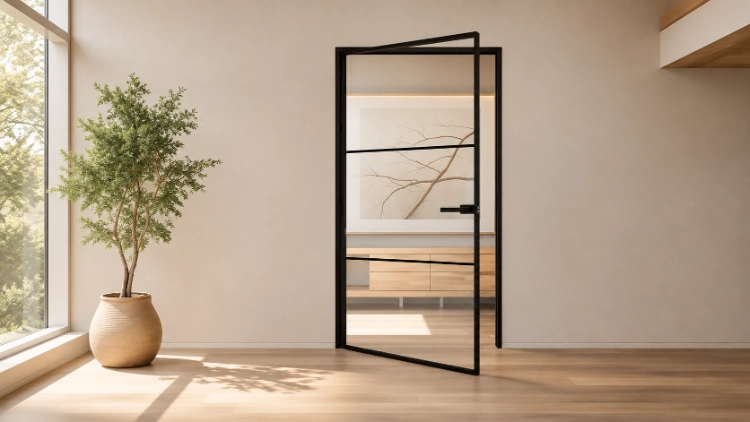
To check door handing, choose a viewing side and stay there. Note which jamb has the hinges and whether the leaf opens toward you or away. Those observations let you select the hand from the project’s chart. Put the abbreviation beside the door number, with the viewpoint and swing still visible on the drawing.
“Left opening” alone leaves too much unsaid. A person in the corridor and a person inside the room see opposite sides of the same door. Both may be describing it honestly. The disagreement usually becomes easier to resolve when the conversation moves from left and right to a labelled drawing.
What Door Handing Describes
Stand in front of a closed door, then walk through it and turn back. The hinges appear to have changed sides, although nothing has moved in the installation. A hand designation avoids this problem by tying the hinge edge and swing to a chosen reference side. The frame and hardware can then be specified against that arrangement.
Inswing and outswing describe movement relative to a space. A bedroom door that opens into the bedroom is an inswing door for that room. Someone approaching it from the corridor sees the leaf move away. The room name makes those two descriptions agree.
For a left hand vs right hand door enquiry, write down the adjoining room names before assigning either label. Give a photograph the same context. Without it, the buyer may be looking at a perfectly clear picture from the opposite side to the one used in the schedule.
The order also has to work as an assembly. The latch needs to reach the strike and the leaf’s hinge positions need to meet the frame’s. Reversible hardware can help in some arrangements, but it does not automatically make a prepared frame or leaf reversible. Check the parts that will actually be supplied.
Choose One Viewing Side Before Naming the Swing
Give the observer a place to stand
Use the convention named in the project door schedule. If the schedule has no handing key, agree one with the person supplying the hardware. Write the reference side on the drawing in ordinary room names, such as “corridor looking into office.” Someone reading it later should not need to guess where the photographer stood.
“Outside” can be a surprisingly awkward word for an interior door. A chart may use it for the approach or key side, even when both faces of the door are indoors. Replace the ambiguity with the actual room names on your drawing. Then show which room the observer occupies for this check.
Watch the leaf from that position
Close the door, stand at the agreed viewpoint and locate the hinged jamb. Record left or right as seen from there. Then open the leaf and record whether it moves toward you or away from you. These are two observations, so keep both in your notes.
On a plan, attach the drawn leaf to that jamb and put the swing arc on the side into which it opens. For a new opening without a door, draw the intended movement first. For a replacement, photograph the whole opening as well as any hardware detail. A close-up of the handle may be useful for identifying the hardware, but cannot establish the reference room.
When forwarding the drawing, keep the room labels in view. Cropping a plan down to its swing arc may make a neat screenshot, but removes the information that tells the next reader how to orient it.
Read LH, RH and Reverse Handing on a Plan
El Steel Door Institute handing chart is a North American reference for doors, frames and hardware. The table below uses its convention, with the observer remaining on the designated outside or key side. It is a useful shared key for an order, rather than a claim that every market uses identical terminology.
| Hinges seen from reference side | Leaf movement | Designation |
| Left | Away from observer | LH, left hand |
| Right | Away from observer | RH, right hand |
| Left | Toward observer | LHRB, left hand reverse bevel |
| Right | Toward observer | RHRB, right hand reverse bevel |
Try the table with a left-hinged opening. That observation leaves both LH and LHRB as possibilities. The movement settles which row applies. Away from the reference observer gives LH; toward that observer gives LHRB. Use the door swing chart with both observations, even when the hinge side seems obvious.
If the reference side is the corridor and the leaf opens into the room, a left hand inswing door falls in the LH row. The mirrored arrangement is a right hand inswing door and falls in the RH row. The phrase “into the room” is doing useful work here. Keep it when describing the opening in an email.
Read “reverse bevel” as the chart’s designation for that arrangement. It is not a site instruction. Turning over a completed leaf or reversing its lever is not a substitute for ordering the required door, frame and hardware preparation in the first place.
You may encounter the shorter labels LHR and RHR. Compare them with the supplier’s chart before copying them into a schedule that uses LHRB and RHRB. Resolve the notation against the drawing, not against a remembered rule from another project.

Carry the Same Convention Across Mirrored Rooms
Consider two hypothetical offices entered from a corridor. From that corridor, D01 has hinges on the left and opens into the first office. D02 serves a mirrored room, with hinges on the right and a leaf opening into that room. Under the convention above, D01 is LH and D02 is RH.
D01 and D02 might have the same dimensions, finish and glass. That makes it tempting to copy the first row, but the hand is the detail that must change. Give each opening its own row and check each against the plan. The product photograph is unlikely to reveal a scheduling mistake of this kind.
Use a door type to identify the repeated design. Use the door number to identify the actual location. This allows several openings to share one design while keeping their hands and hardware requirements separate. Count quantities from those completed rows rather than assuming all rooms of one type need the same hand.
The distinction also helps when a plan changes. If an office is mirrored during design, revisit its door number. Check the hinged jamb and swing arc, then update the corresponding row. Moving a desk may not affect handing at all. Moving the entrance might. Review the affected opening rather than changing every row that shares its door type.
Before issuing the revised schedule, check that its drawing reference points to the current plan. A correct new row attached to an obsolete plan still leaves the person ordering the door with conflicting instructions.
Keep a revision date on the schedule and identify which door numbers changed. If the buyer has already counted the earlier LH and RH quantities, those numbers show where the count needs updating without suggesting that every opening has been redesigned.
Send a Door Schedule That Matches the Hardware
A supplier opening the schedule should be able to find a door on the plan and understand its arrangement. Begin each row with its number, adjoining rooms and drawing reference. Add the viewpoint and hand, then the leaf and frame dimensions and hardware set. If a standard column cannot describe an unusual arrangement, explain it in the remarks and attach the relevant detail.
The SDI scheduling guidance brings doors, frames and hardware together for this reason. Where purchasing is split, the leaf supplier and lock supplier can refer to the same numbered opening. It is easier to check whether their proposals agree when both point to D01 than when each refers loosely to “the office door.”
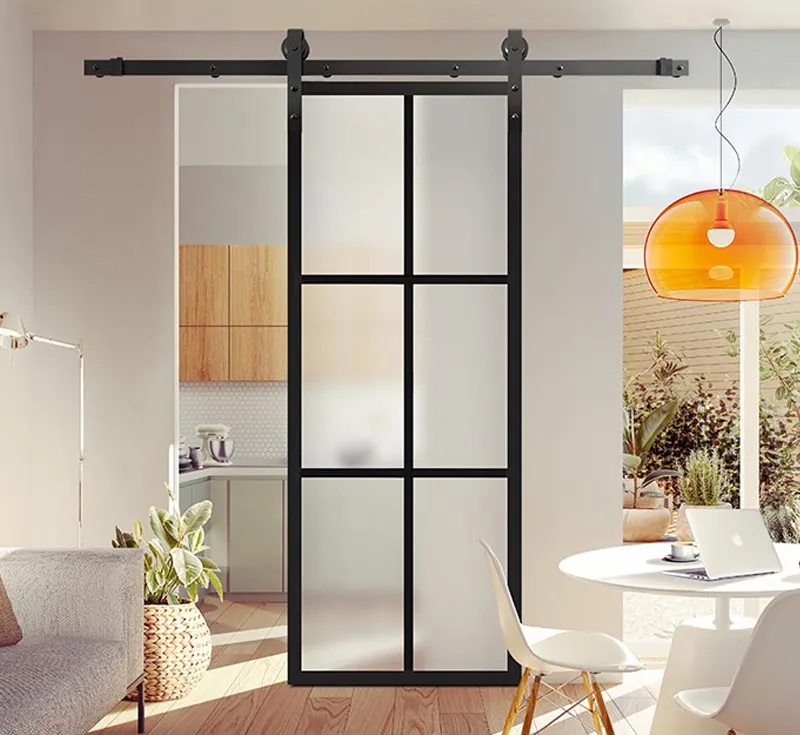
One option among Metek’s metal frame glass hinged doors is a black framed interior door with three clear glass sections. Matched hinges and a locking lever handle accompany that design, with custom sizes available. Include its dimensions and intended movement in the same enquiry so the appearance and operating arrangement are considered together.
Show the hinge edge and lock side on the proposed drawing. Selecting a glass pattern or frame finish settles appearance, but leaves the operating arrangement unanswered. A complete enquiry makes those choices visible before the supplier prepares the order.
With the openings numbered and their views agreed, send Metek your marked door schedule. Request the proposed leaf, frame and hardware arrangement against those numbers. Compare it with the marked plan while any discrepancy can still be corrected on paper.
Preguntas frecuentes
Q1: Does looking from the other side change the door’s hand?
A1: No. It changes the apparent left and right sides. Apply the hand designation from the reference side named in the schedule. Label a photograph taken from the opposite room so it does not appear to contradict the plan.
Q2: Can every door handle be changed from left to right?
A2: No. Some hardware is reversible and some must be selected for the required hand. Check the particular lock and lever instructions. When retaining a frame, include its strike arrangement in the replacement enquiry as well.
Q3: How should the active leaf of a double door be identified?
A3: Mark the active leaf from the agreed reference side, show both swings and identify the locking arrangement. Use the supplier’s paired-door convention. The single-leaf table above cannot describe the whole pair by assigning it one abbreviation.





Nuestros productos
Nuestros productos


nuestros testimonios
Lo que dicen de nosotros

"Confiamos en Metek y siempre hemos mantenido una muy buena relación con todos ustedes;
Metek es confiable, no solo como socio comercial, sino también como amigo.
Pueden resolver los problemas; pueden seguir adelante y avanzar.
¡Y eso es lo que hicimos, junto con todo el equipo de Metek!"

"Metek tiene 10 años y llevamos más de 8 años trabajando con Metek.
Seguimos comprometidos con progresar y lograr más que el año pasado.
Y es un gran logro, alcanzado por Metek durante estos últimos diez años.
En la próxima década, seguiremos adelante y desarrollaremos juntos el mercado australiano."

"A todos los miembros de Metek
Ahora llevamos seis años trabajando juntos y seguimos creciendo junto con Metek, uno de nuestros mejores proveedores en China.
¿Por qué son uno de los mejores?
Es porque nos ayudan a crear nuestro mercado; nos ayudan a crear nuevos productos; nos ayudan a conseguir la calidad adecuada; nos ayudan a resolver nuestros problemas.
Saben, todos ustedes son muy buenos educadores; entienden nuestro idioma y nos entienden como clientes.
Y creo que eso demuestra que nuestra colaboración nos mantiene unidos.
Y espero que en los próximos años podamos seguir trabajando juntos y avanzar unidos hacia su futuro de productos creativos y hermosos."