
News
Contact UsSliding vs Folding Doors Structural Efficiency and Aesthetic Value
-
 author
- 15 July 2026
Sliding and folding doors both save room compared with a swing door, but they do not behave the same on a project. A sliding door moves on a straight track. A folding door breaks the opening into panels and stacks them to one side. That one difference changes daily access, hardware stress, cleaning, and even how the wall looks when the door is closed. For closet work, apartment interiors, hotel rooms, and retail fit-outs, the choice should start with the opening, not with the nicest product photo. A sliding door can keep a wall calm and flat. A folding door can make the whole closet easier to reach. Neither one is automatically better. It depends on what the room needs to do.
First Check the Opening
When a sliding door system is not the right solution and a folding door system would be more suitable—in particular, about the possible opening width. While there are no problems with swing clearance, as a rule, a sliding door does not leave the full width of the storage area free. This is because the door usually covers a larger area than the actual door leaf of the corresponding folding door system, which, as a rule, clears more of the opening than a sliding door, depending on how the panels of a folding door system fold and stack. For this reason, a folding door system is often used for closets. This is because they provide greater visibility of the interior of the closet, i.e., of shelves, of clothes hangers on rods, of drawers, of baskets, and of storage boxes of all types.
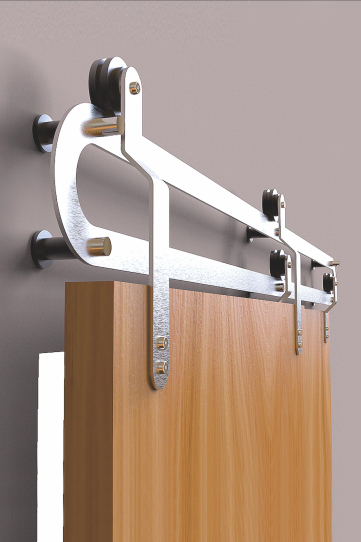
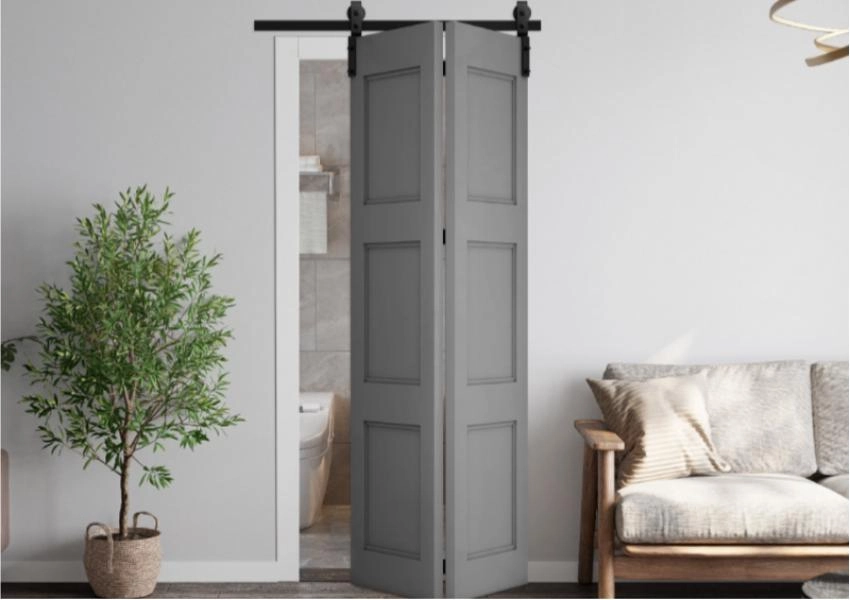
The folding barn sliding door is a good example. The product is not only about two panels folding neatly. The track, roller, hinge movement, panel weight, and top support have to work together. If one part is not matched, the door may drag or feel loose after repeated use.
Where Sliding Doors Still Work Better
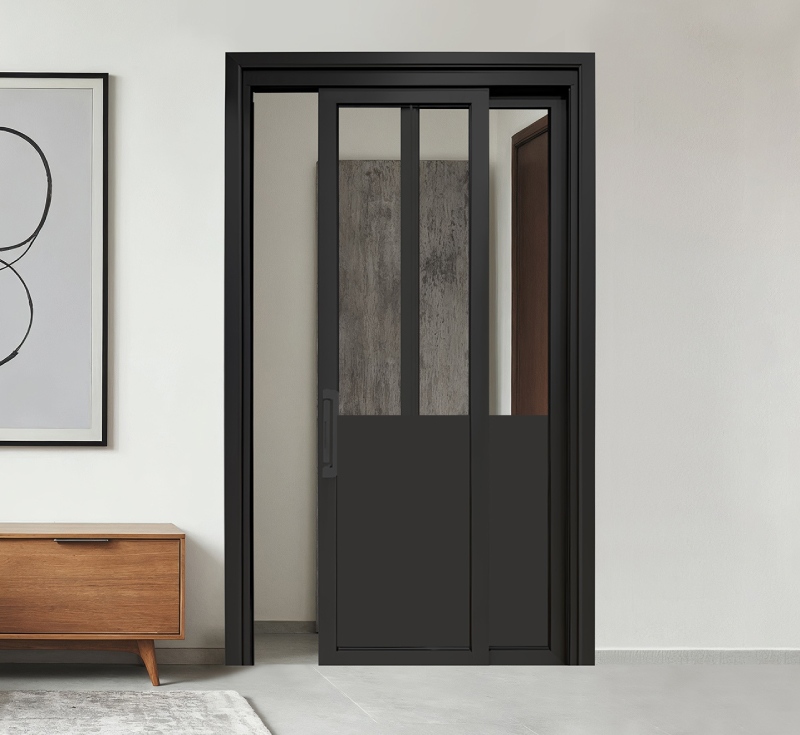
Sliding doors are often better when the wall needs a cleaner surface. A closet front, a hallway opening, or a minimalist bedroom may look better with panels that move in one line. This is why designers still choose sliding systems even when folding doors offer wider access.
The interior sliding pocket door system is useful when the door can move into a wall cavity. It saves the swing area of a hinged door and keeps the opening clear when the panel is hidden. This works well for tight corridors, small bedrooms, ensuite areas, and rooms where a visible door panel would feel heavy.
The invisible magic trackless sliding door works in a similar visual direction. It focuses on concealed rails and a cleaner “Ghost Door” look. Compared with a folding system, it is not mainly about full-width access. It is about making the wall look quiet. For minimalist interiors, that can be a stronger reason to choose sliding hardware.
Folding Doors in Closet Design
Closets are probably the easiest place to see the difference. A sliding closet door is neat, but it often leaves one side covered. For a small closet, that is acceptable. For a wide wardrobe, it can be annoying because users have to keep moving the panels to reach different sections.
A folding door opens in a more direct way. Once the panels fold aside, more of the closet is visible. That helps in dressing areas, hotel wardrobes, storage rooms, and compact urban homes where people do not want to waste time fighting the door.
The PVC foldable door fits simpler interior divisions where a heavy panel is not necessary. It can work in storage corners, utility spaces, and rooms where easy installation and maintenance are more important than a premium solid panel. Still, it should not be selected only because it is light. Panel size, hinge quality, track clearance, and daily opening frequency still need checking.
Hardware Is the Part That Takes the Abuse
Sliding and folding doors can both fail in different ways. Sliding doors depend on the quality of the tracks, rollers, guides, stoppers, and soft-close parts. A buildup of dust in the track, weak rollers, or a poor guide can cause the door to become noisy or uneven. Folding doors depend more on hinges, pivot points, panel synchronization, and top support. One hinge out of line can affect the whole movement. A small gap may become more obvious after months of use. This is why folding hardware needs more attention during installation.
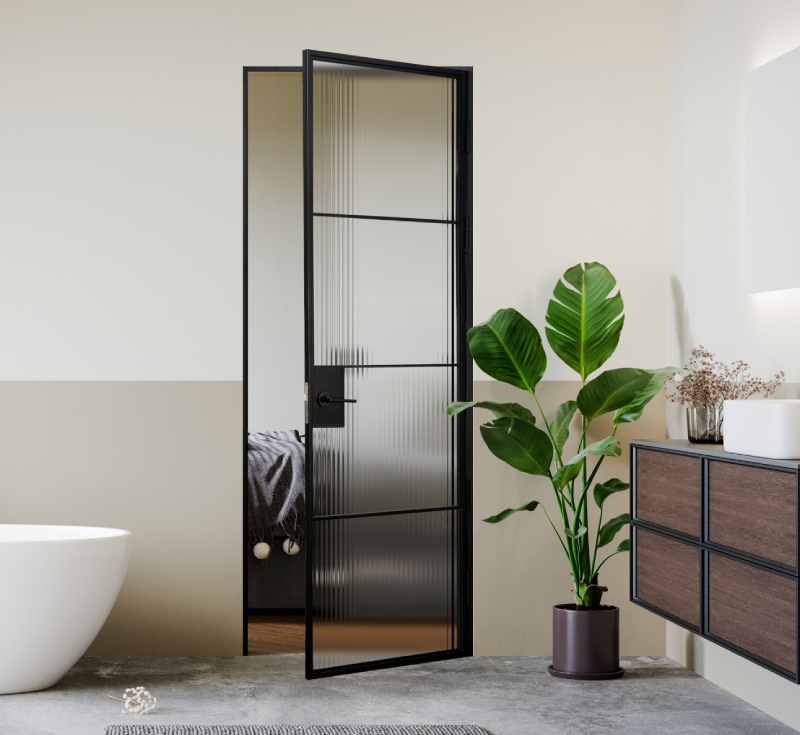
In the case of sliding folding doors, the aluminum frames are designed to be strong and rigid without placing too much weight on the panel. This allows for a variety of different panels to be used, including wood or composite panels that provide a warmer feel and look to the door. Glass or mirrored insert panels can also be used to brighten up a closet space. Magnetic seals may help improve closing consistency when properly installed. They are not a fix for poor alignment. If the panels are not straight, the seal will not make the system feel good.
Finish and Material Choices

A door finish is more than just a color or style to complete a room. A finish also affects cleaning and wear, light reflection, and the “feel” of a room. For commercial projects, spare parts and surface repair are worth discussing early. Scratches, edge chips, broken guides, and worn rollers are small problems, but they can become service complaints in hotels, apartments, and retail spaces.
Installation and Maintenance
A good product can still perform badly if the opening is not ready. Before installation, check opening width, panel height, wall flatness, frame strength, floor clearance, and hardware position. It sounds basic, but repeated measurement errors across many rooms can become expensive.
The servicing of our sliding doors and folding doors is generally straightforward to carry out. From time to time, the sliding door tracks and door rollers will require cleaning to maintain smooth operation. Folding doors have hinges that can wear and benefit from periodic lubrication. Some of the door surfaces, such as PVC, veneer, mirror, glass, and matte lacquer, require very different cleaning treatments. We recommend that for project orders, it is worth checking if spare parts such as door rollers, hinges, door guides, and soft-close parts are to be held as reserves before dispatch.
Working with Metek
Hangzhou Metek Co., Ltd. has specialized in the production, development, and sale of barn doors, barn door hardware, metal frame glass doors, wooden wall planks, acoustic panels, shower rooms, resin tables, and other products since 2011. For sliding and folding door projects, Metek can support product selection, finish planning, hardware matching, packaging, OEM/ODM requirements, and technical communication.
A useful project discussion usually starts with plain questions. How wide is the opening? How heavy is the panel? Is full closet access more important than a flat wall? Should the system be sliding, pocket, hidden, bifold, or folding? What finish will match the room? How will the products be packed? Once these points are clear, the door choice becomes much safer. If you would like to learn more, please read this article.
FAQ
Q1: What differentiates folding doors from conventional sliding models?
A1: Folding doors stack several panels to one side so more of the doorway can open at once. Sliding doors move along a track and often leave part of the opening covered. Folding doors work well when full closet access matters. Sliding doors are often better when the project needs a cleaner wall line or limited floor clearance.
Q2: How do material choices affect long-term performance?
A2: Material choice affects panel weight, hinge stress, track load, surface durability, and maintenance. The lightweight of aluminum door frames allows them to be very rigid. Wooden or composite panels add a warm feel to the door. Glass or mirrored panels can increase light in a room and provide a decorative feature. The edges of glass must be properly protected during packaging and installation. Specially designed door hardware is also required to ensure the long-term performance of these panels.
Q3: Are smart automation features compatible with existing installations?
A3: Some systems may support later automation, but retrofit work depends on track structure, power access, panel weight, and installation space. Buyers should confirm these details before ordering motorized tracks or connecting the door system with home automation hubs.





Our Products
Our Products

our testimonials
What They Say About Us

"We trust Metek, have always had a very good relationship with each of you folks;
Metek is reliable, not only as business partner, but also friends.
You can tackle issues; you can go on and move on.
And that’s what’s we did—together with all Metek!"

"Metek is 10 years old, and we have been working with Metek for more than 8 years.
We still welcome progressing and achieve more than what we did last year.
And it is big achievement, which was done at Metek last ten years.
In the next decade, we will keep going and develop the Australian market together."

"To all Metek members
We now work six years together,we still grow together with Metek, with one of our best suppliers in China.
Why are you one of the best?
It’s because you help us to create our market; you help us to create new products; and you help us to get the right quality; you help us to wonder our issues.
You know, you are all very good educators; you understand our language; you understand us as customer.
And I think that makes the partnership show you are together.
And I hope for the next years, we can still work together, and move on together into your future creative, beautiful products."